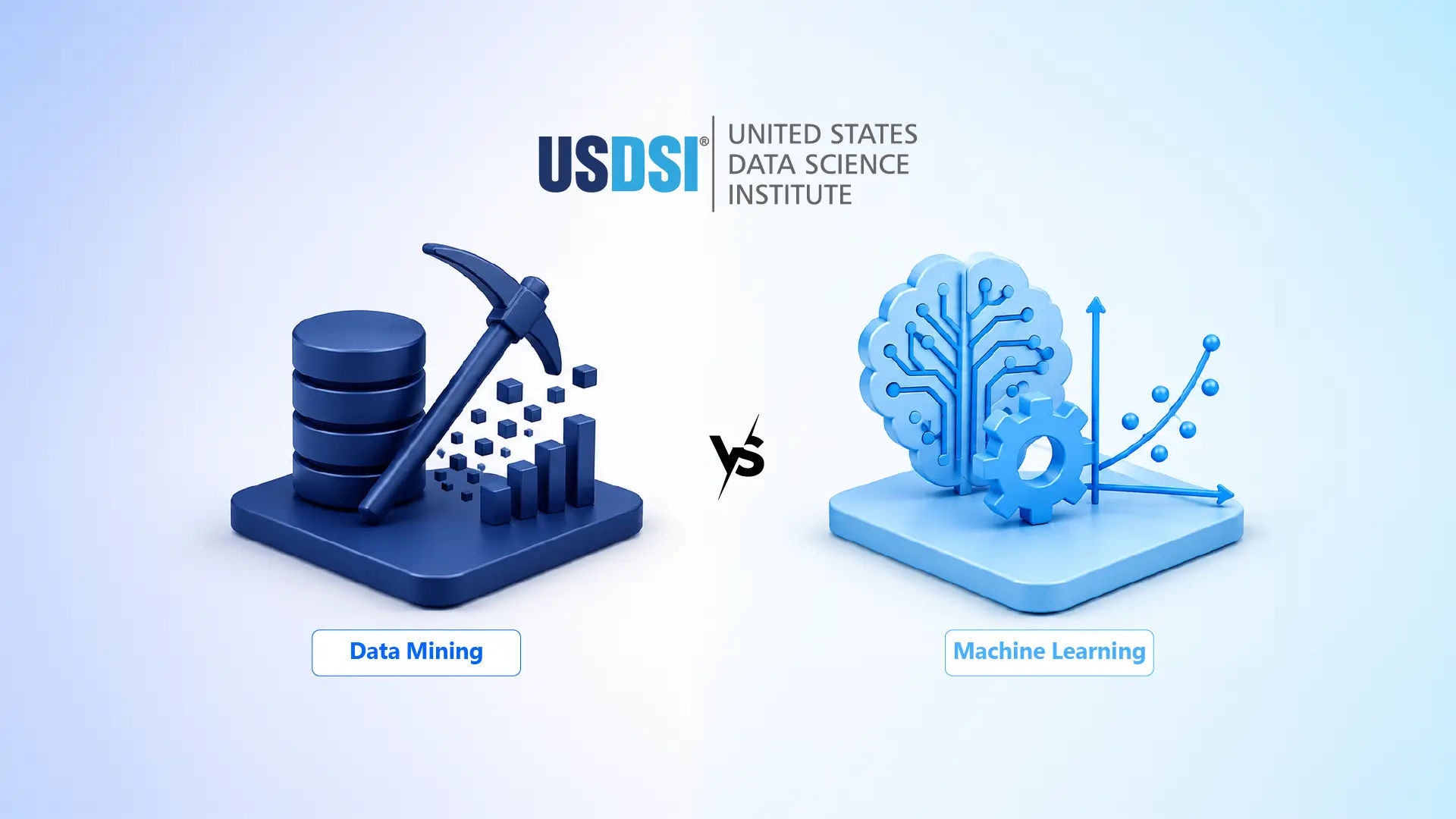
Data mining and machine learning are frequently used interchangeably, though the two disciplines address fundamentally different problems, even as they sit close enough together in practice that the boundary between them often blurs.
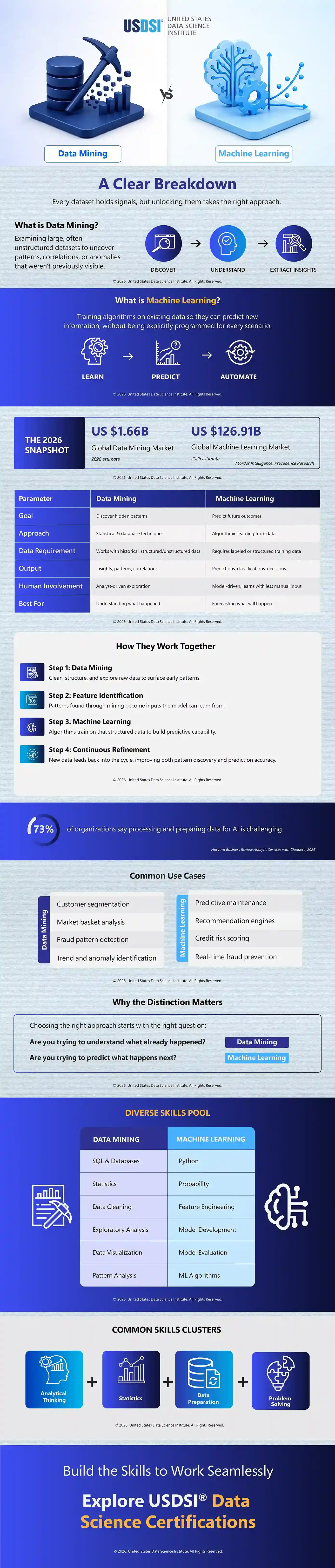
Data mining is concerned with discovery. It examines large, often unstructured datasets to surface patterns, correlations, or anomalies that were not previously apparent. Machine learning is concerned with prediction. It trains algorithms on existing data so that those algorithms can generate decisions or forecasts on new information without requiring an explicit rule for every possible scenario.
The two are rarely fully separable in practice. A machine learning initiative typically begins with data mining work, cleaning records and identifying preliminary patterns, before any model training takes place. This interdependence shows up in current adoption figures. Deloitte's 2026 State of AI report found that two-thirds of organizations now report measurable productivity gains from enterprise AI, and those gains are rarely traceable to one discipline working alone.
Why does the distinction matter in practice? Because the two objectives call for different starting points. Finding out what already happened in a dataset is not the same task as building something that predicts what happens next, and getting that distinction right from the outset determines which approach a team should actually take.
The infographic breaks down the key differences between data mining and machine learning, covering their goals, methods, and how they work together in practice.
This website uses cookies to enhance website functionalities and improve your online experience. By clicking Accept or continue browsing this website, you agree to our use of cookies as outlined in our privacy policy.