
Generative AI's reliability rests upon its underlying data quality. When training and input data are incomplete, outdated, or inconsistent, the output will mirror these problems with incorrect responses, dubious summaries, and unverifiable outputs. Leading to data quality becoming now a basic requirement for any business using generative AI.
Industry findings confirm the concern. In Cloudera’s Data Readiness Index 2026, a survey of IT leaders at companies with more than 1,000 employees, 22% identified data quality as the most-cited reason AI initiatives fall short of expected returns.
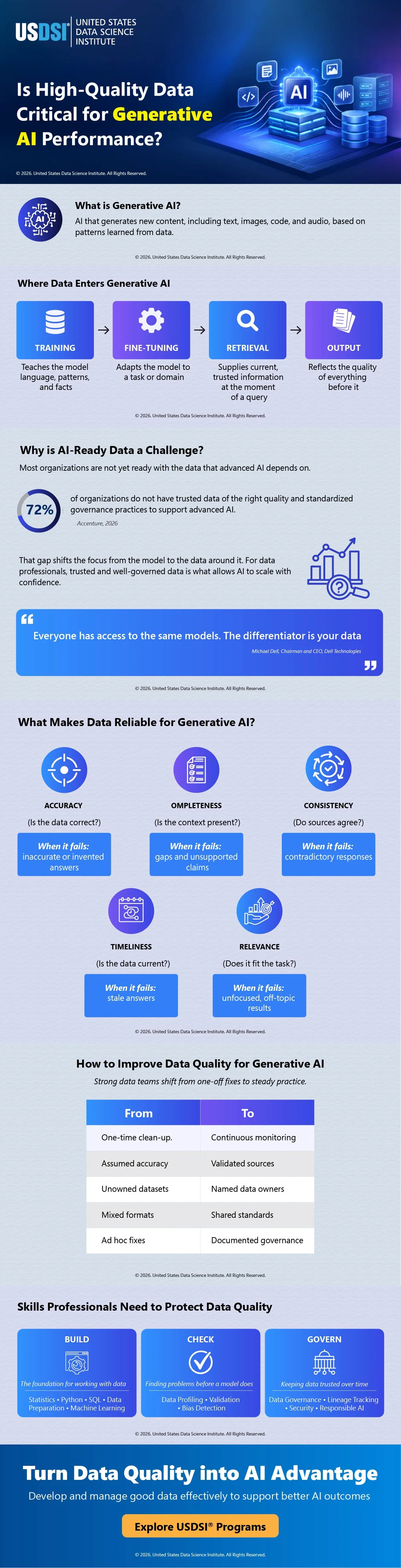
Teams evaluate data quality in five areas, including accuracy, completeness, consistency, timeliness, and relevance. The influence of each dimension on understanding context and the validity of model outputs is related, and a lack of it in one affects the other. These standards are maintained through defined ownership and robust governance with regular validation of changes in data.
For professionals, it ranks as a tie with data skills and modeling skills. Knowing when data is suitable for use enables AI systems to be effective and trusted by stakeholders.
In this infographic, we dive into the importance of data quality for generative AI and the data best practices that ensure outputs are accurate, relevant, and reliable.
This website uses cookies to enhance website functionalities and improve your online experience. By clicking Accept or continue browsing this website, you agree to our use of cookies as outlined in our privacy policy.