AI systems are increasingly used to interpret text and images, video, audio, and sensor data. Effective management of these various inputs is a crucial component of creating effective, reliable AI applications.
The 2026 State of Visual and Physical AI survey by Voxel51 revealed that 68% of practitioners are dealing with three or more data modalities, showing the complex nature of the data in today's AI projects. This presents a challenge for data science teams to ensure data is aligned, quality-checked, and evaluated appropriately. This read explores the concept of multimodal data, its value, and its challenges when managing data with best practices.
Why Does Multimodal Data Matter for AI?
Multimodal data is used to teach AI systems how to perform tasks that require multiple forms of input. AI and machine learning models can support complex data workflows across industries by processing text, images, audio, video, and structured records together.
Types of Data in a Multimodal Dataset
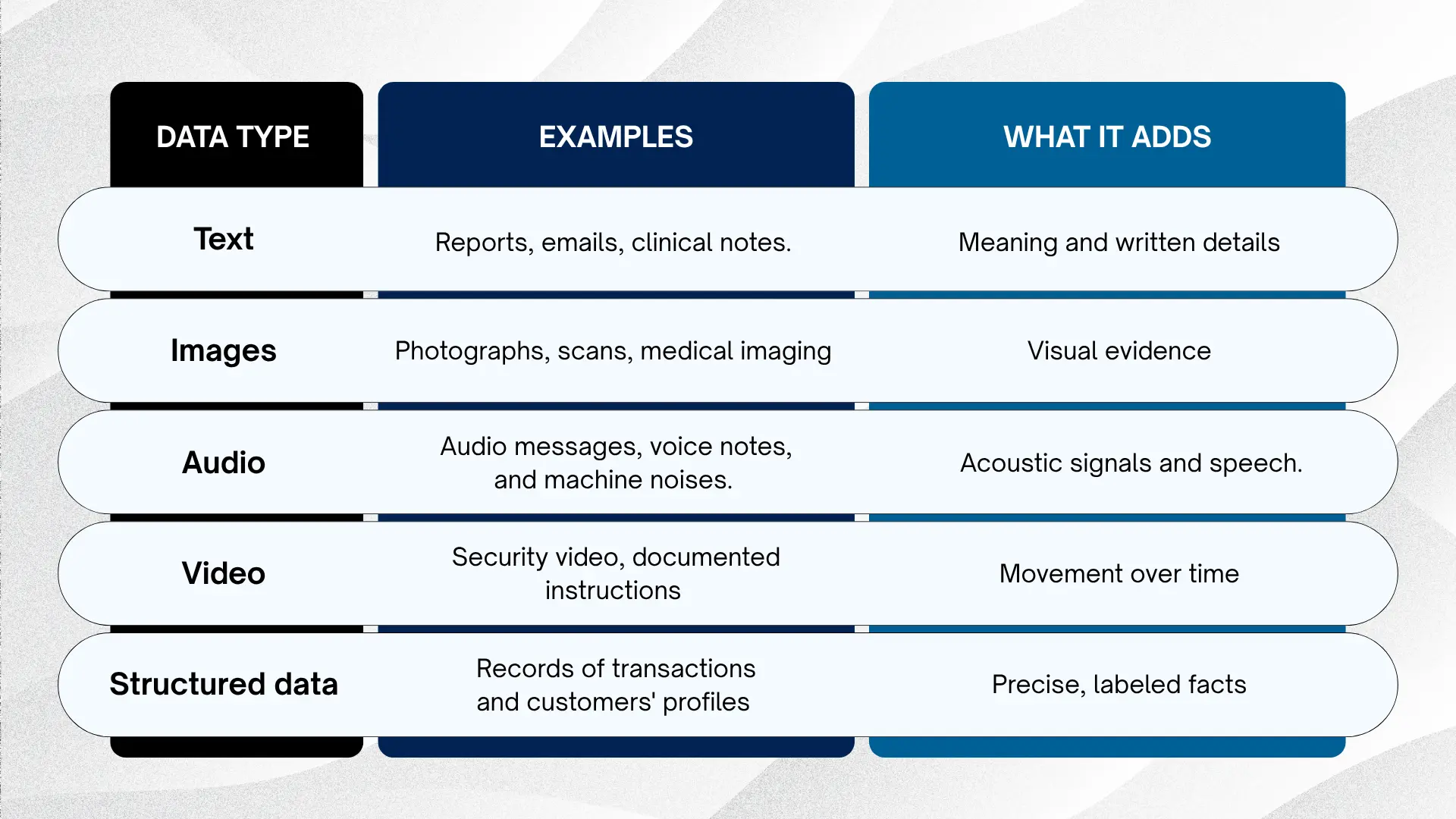
A multimodal dataset draws on several formats at once. Each format carries its own set of structure, size, and preparation. Listed below are common data types.
How Different Data Types Come Together in One Model
A multimodal model uses data from all available modes to make predictions. It is the quality of this usage that determines the effectiveness of the final product.
This process comprises three phases:
The alignment is where the majority of projects fail. If the time codes are inconsistent or if the identifiers do not match, the training process yields inaccurate results. Teams that want to see how aligned inputs are used in practice can explore USAII’s article on how multimodal AI is redefining modern AI applications.
How Does Multimodal Data Assist in Business Growth?
Integrating multiple types of data provides companies with deeper knowledge about customers, properties, and risks. The advantages are revealed in model functioning and everyday work.
Why is Multimodal Data Hard to Manage?
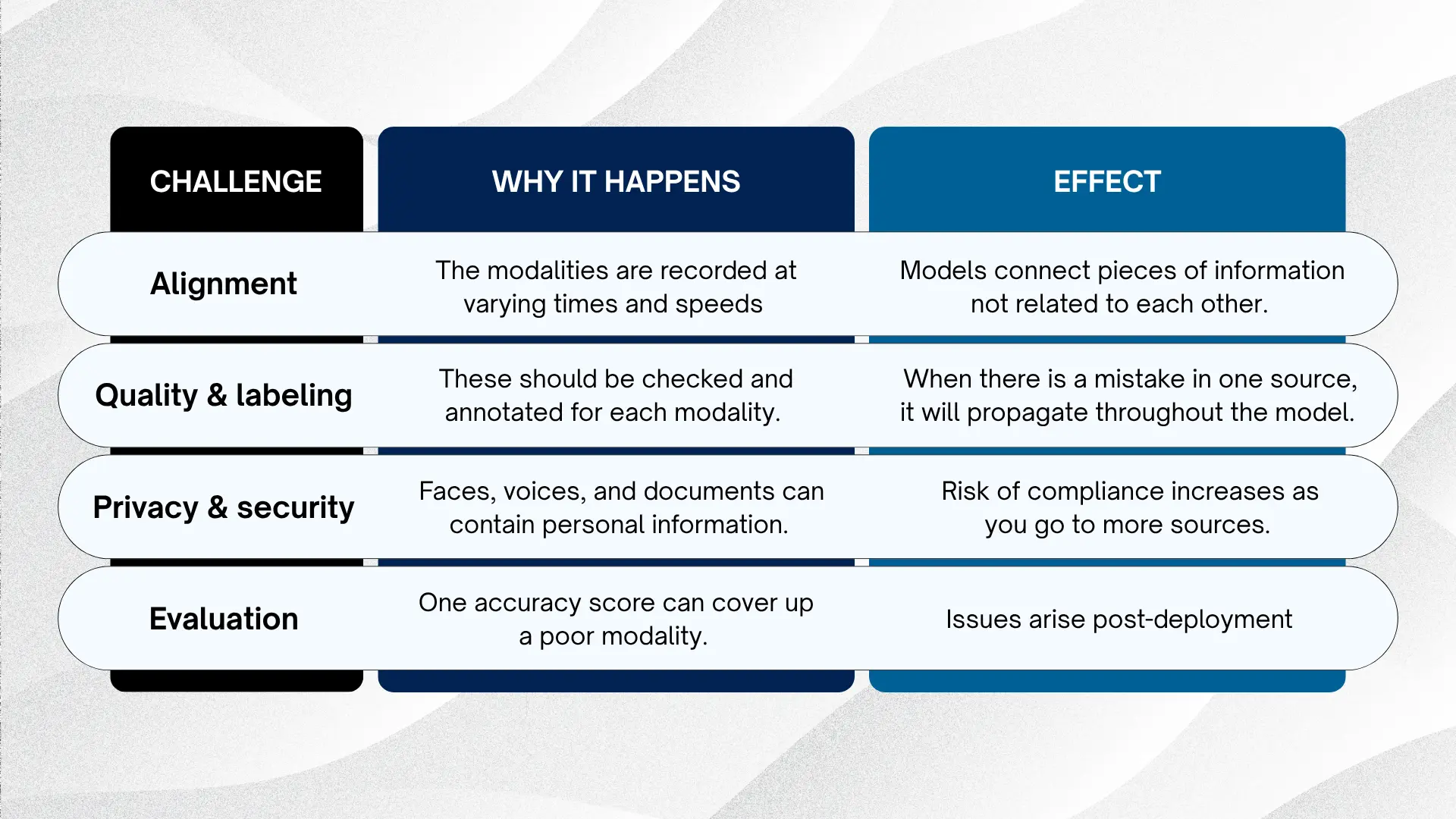
Though multimodal data is valuable because of its diversity, its management is not easy. The problems derive from data issues, including how mixed formats are stored in data lake architectures, that occur before model training starts. The most common challenges are mentioned below.
How to Build a Reliable Multimodal Data Practice
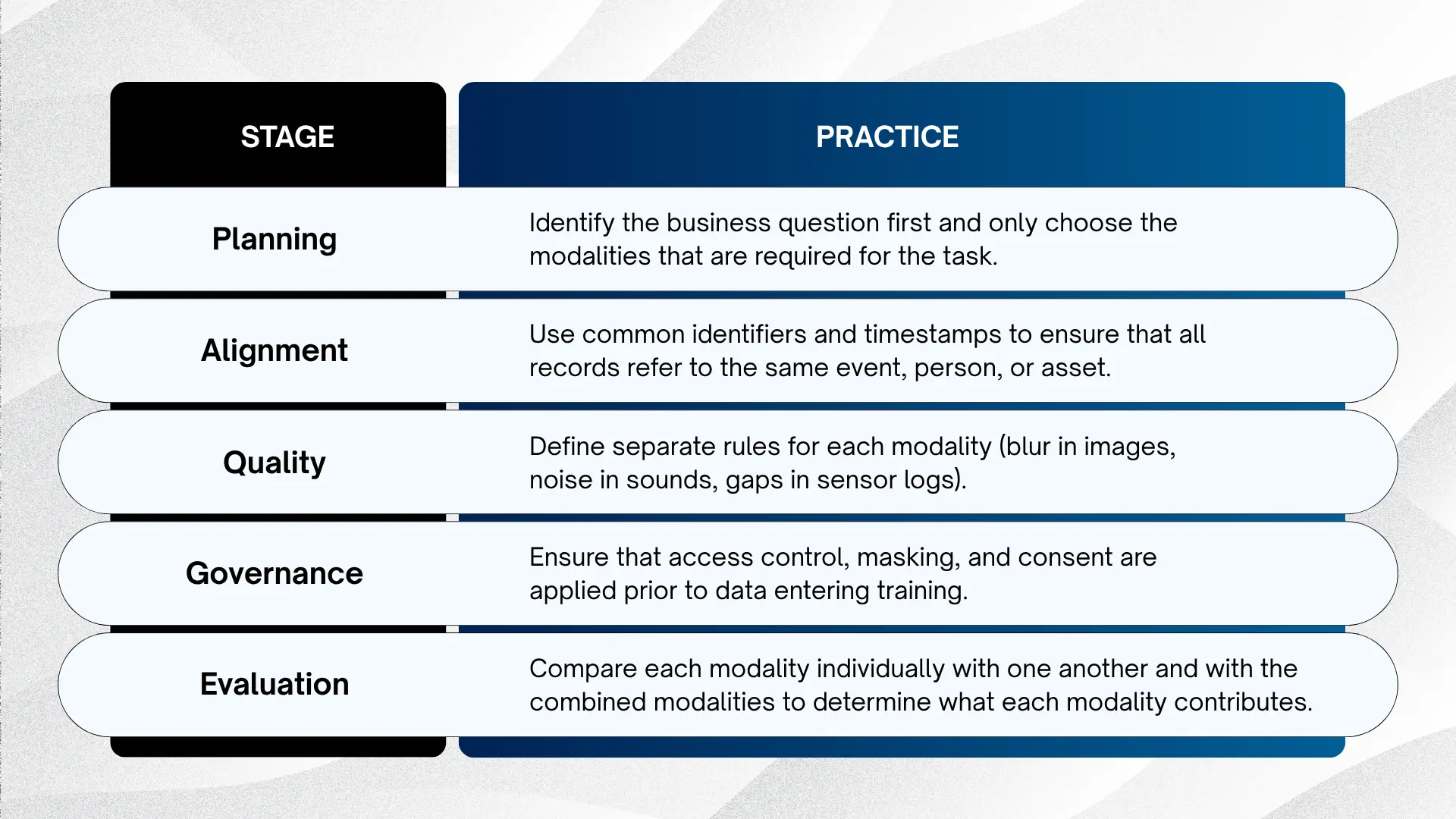
Reliable multimodal systems depend on how data is prepared before training begins. Each practice below covers one stage, from collection to deployment.
Top Skills Needed to Work With Multimodal Data
Multimodal work is a combination of various aspects of data skills, with some data-specific skills included. Those who have experience in both are in the best position to take the lead on these projects. Data preparation, modeling and evaluation, pipeline design, and governance are the competencies required to work with multimodal data.
USDSI® data science certifications give professionals a structured way to build these skills at each career stage. CDSP™ builds the foundation, CLDS™ develops lead-level capability, and CSDS™ prepares senior professionals to guide data strategy. Pairing a certification with hands-on projects on mixed data types shows employers how you apply what you know.
Making Multimodal Data Part of Your AI Strategy
Multimodal data brings new responsibilities for data scientists. The process starts with data quality and ends with models that can be trusted by organizations. Data science teams need to understand data alignment, labeling, governance, and testing. These decisions will determine how well the model works. Professionals who understand how to create these competencies will have an advantage when multimodal initiatives evolve.
FAQs
How is multimodal data different from multimedia?
Multimedia is content made for people to view or hear, while multimodal data is organized so that models can learn relationships across formats.
Can synthetic data help with multimodal projects?
Yes, because artificially generated examples can supplement scarce data, such as rare images or audio clips, when real samples are limited.
What is a vision-language model?
It is a model that connects images and text, so it can caption a picture or answer questions about it.
This website uses cookies to enhance website functionalities and improve your online experience. By clicking Accept or continue browsing this website, you agree to our use of cookies as outlined in our privacy policy.