Data is being generated at a scale most organizations are still learning to keep up with. Turning that volume into actual business value, however, demands more than storage capacity; it requires the right expertise.
The GMAC Corporate Recruiters Survey 2026 puts this in perspective: data analysis and interpretation climbed to fourth among the most-valued workplace skills this year, up from tenth just twelve months earlier. It signals where organizational priorities are heading.
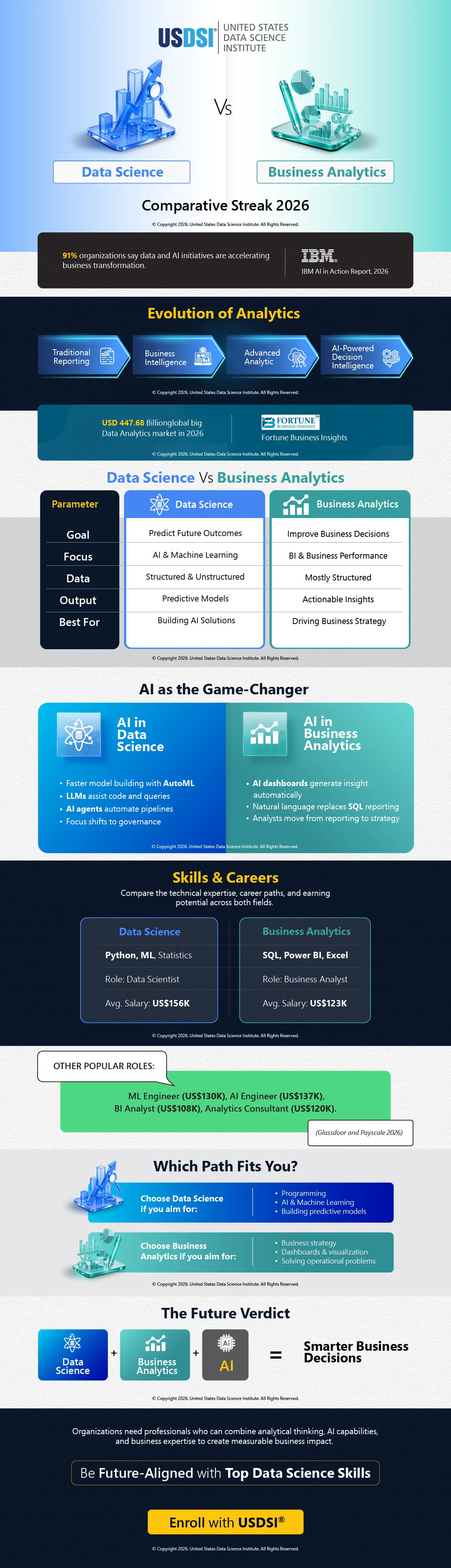
This context makes the Data Science versus Business Analytics conversation worth having carefully. The two fields are often grouped together, but they serve different purposes. Data science is about prediction, machine learning and making more and more intelligent solutions. But Business analytics goes otherwise, analyzing historical and real-time business data to make them sharper, monitoring their performance and informing decision-making at the strategic level.
Technology has significantly changed how both fields get their work done. Workflows that once took days are now completed in hours. Pattern recognition that required senior-level manual effort is handled faster and at a greater scale. Data science professionals entering or advancing in either field now need a skill set that covers statistical thinking, programming, data visualization, business context, and comfort with modern analytical tools.
The infographic that follows breaks down where data science and business analytics differ, how AI integrates, what skills each field demands from its professionals, and what career paths they open up.
This website uses cookies to enhance website functionalities and improve your online experience. By clicking Accept or continue browsing this website, you agree to our use of cookies as outlined in our privacy policy.