
Data is one of today's most valuable business assets, but its true value lies in how effectively insights are communicated. Deloitte’s report '2026 Global Human Capital Trends' states that while 60% of business executives employ AI in their decision-making efforts, just 5% of managers are able to handle AI-derived decisions appropriately. This shows the critical need for converting data information into easy-to-understand insights.
This is where data storytelling becomes relevant. Making use of data, visualization and storytelling, data storytelling helps businesses in making sense of insights and bringing a change in decision-making processes.
Why Data Storytelling Matters in Modern Business
Data is generated every day in organizations, but data is not a decision. Data storytelling is a vital link between analysis and business action for executives and stakeholders, providing them with insights they can quickly digest and act on.
Data Storytelling can help organizations:
For data professionals, the clear communication of data insights is becoming a skill essential, as AI takes over more analytical work.
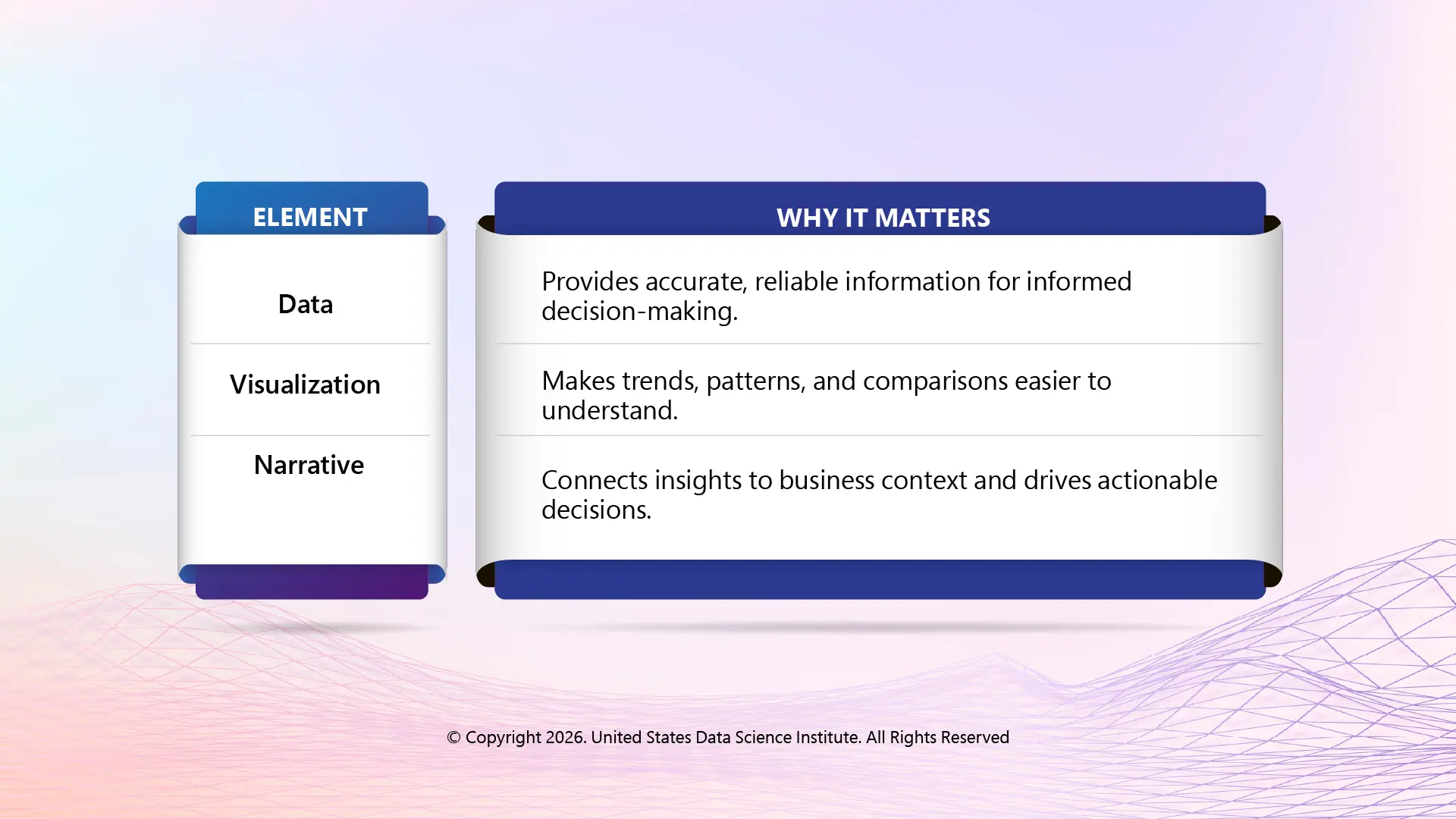
The Three Core Elements of Data Storytelling
There are three key elements to creating a data story.
How to Create a Powerful Data Story?
Making a data story is all about knowing your audience, knowing what to look for and delivering that information in a way that motivates them to take action. Some key techniques include the following.
All data stories start with an objective. Ask yourself:
There are various levels of detail required for different audiences. Senior executives are usually looking for high-level business results, but technical teams might want additional metrics and methodology. Tailoring your story ensures your message resonates with everyone involved.
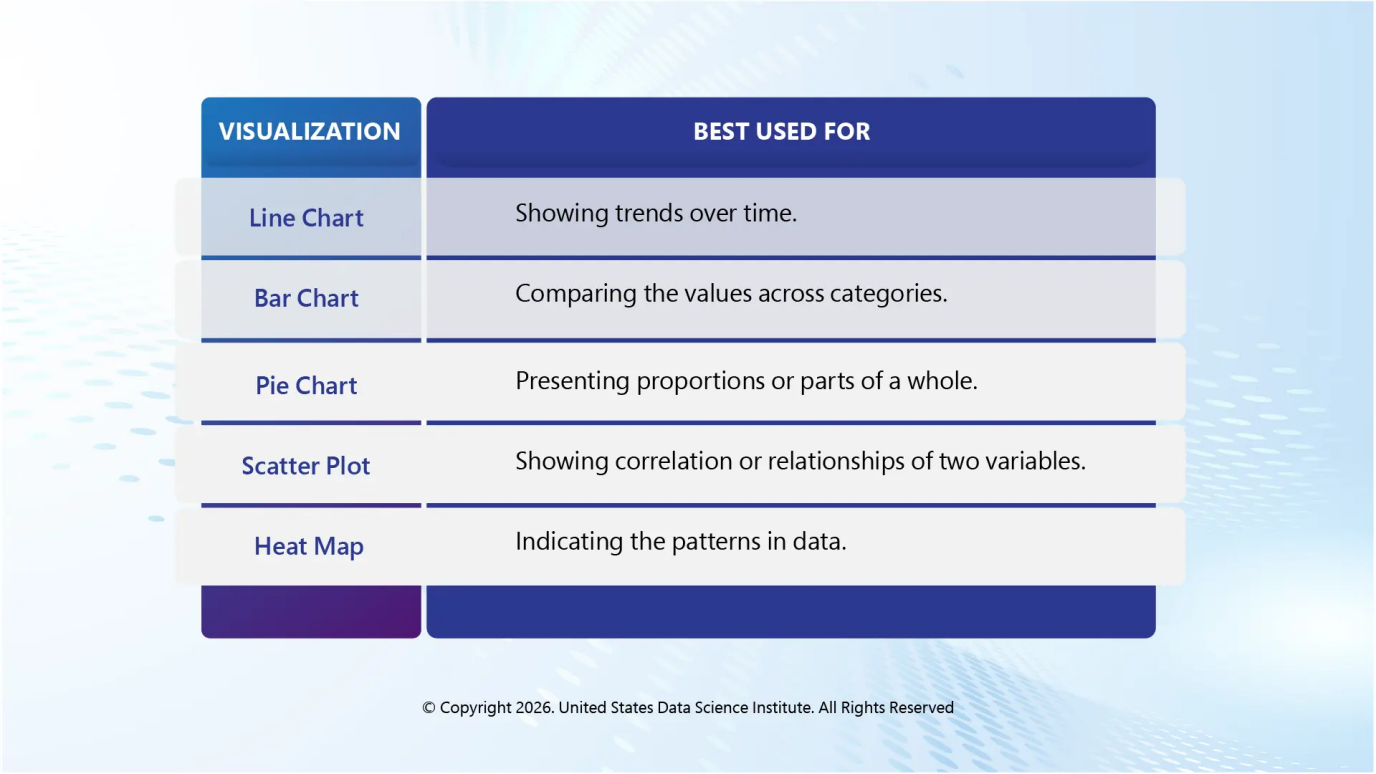
Do not show all the available indicators. Know the insight that will have the biggest business impact and build the story around it. Select the visualizations that will support the story
Some common choices include:
Make comparisons between the performance of the present and the past, business objectives, customer behaviour, or industry standards. Context assists the audience in determining whether the results are signs of success, concern, or opportunity.
Data storytelling is about action. Each presentation should end with an answer to the following question: What do we do now? Turning analysis into business value by giving practical recommendations.
Best Practices for Effective Data Storytelling
There are some simple do's and don'ts that can make a huge difference in how your message is received, as listed below.
Don't add too many charts, metrics, or jargon. Emphasize information that directly relates to your key message and eliminate anything that is not value-added.
A good story begins with good information. The information provided to the business may be incorrect or outdated, and this can quickly lead to lack of credibility and bad business decisions.
Each chart should address a particular question or provide a reinforcement of a key understanding. Select pictures that easily show patterns, not design elements.
Include the results in a logical order:
Problem → Analysis → Insight → Recommendation
This helps the organization assist the reader to follow your reasoning and understand the importance of your conclusions.
Data storytelling always must mean action. Rather than just stating the results, discuss what decision, opportunity, or challenge could be addressed.
Curious about how data becomes the foundation of intelligent AI systems? Explore The Role of Data in AI: A Step-wise Intelligence Ladder to understand how data evolves from raw information into actionable intelligence and why it is central to modern AI applications.
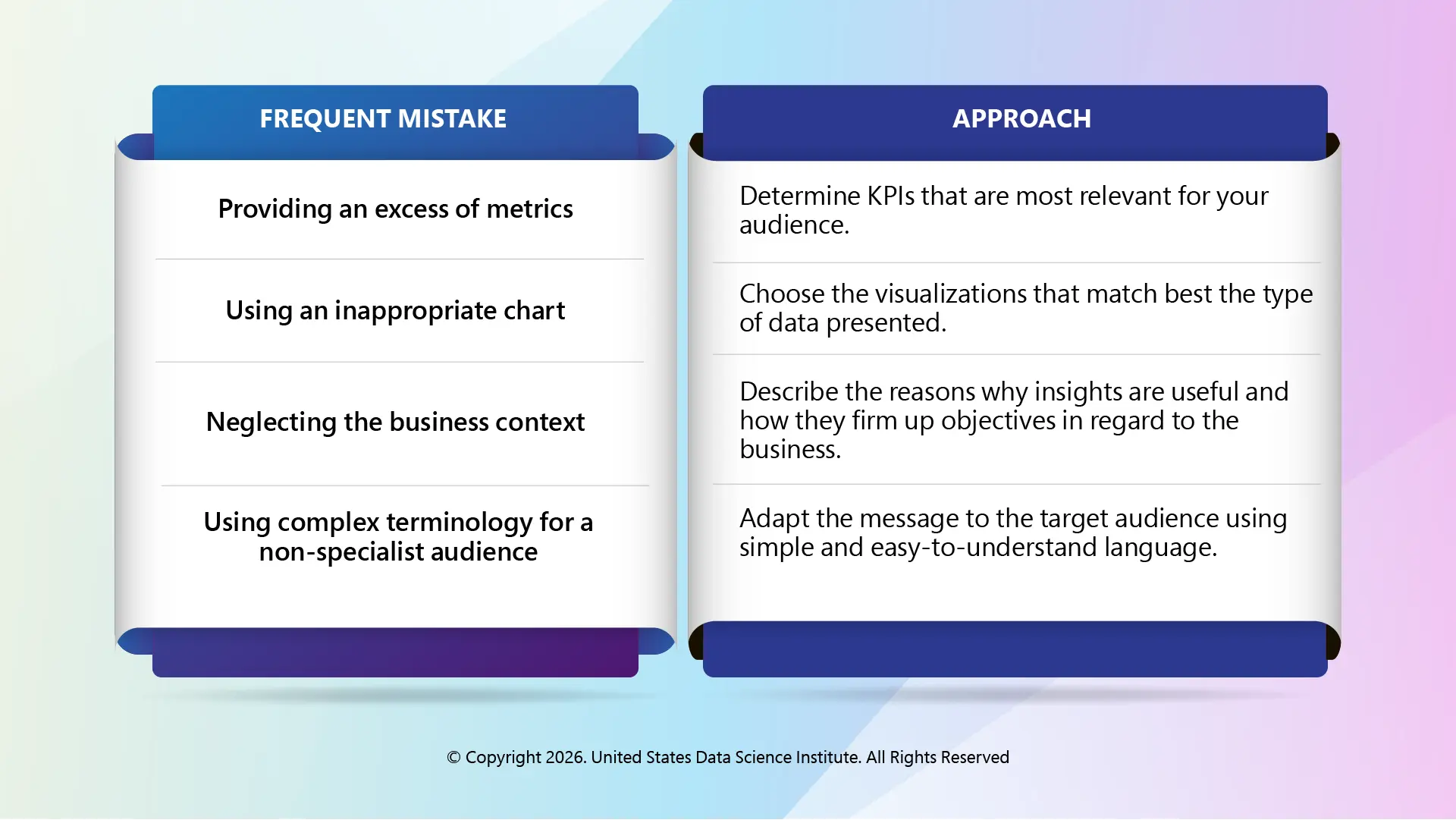
Common Mistakes to Avoid
Even experienced analysts can struggle to communicate insights effectively. Avoid these common pitfalls:
Next Step for Data Professionals
With all the data that businesses are creating, it is vital to communicate insights along with analyzing them. Data storytelling helps turn complex data into simple stories and stories into simple data. Data storytelling makes even the most complicated analytics into a simple and actionable story to influence decisions and business impact.
Professionals can develop these skills by seeking structured learning opportunities to enhance their proficiency in analytics, visualization, AI, and business communication. USDSI® Data Science Certifications empower learners with industry-relevant data science skills, turning data into actionable insights and business value.
FAQs
Is data storytelling only useful for data scientists?
No. Business analysts, marketers, managers, executives, and consultants all use data storytelling to communicate insights effectively.
Which tools are commonly used for data storytelling?
Popular tools include Tableau, Microsoft Power BI, Excel, Python, R, Looker Studio, and Qlik Sense.
How can I improve my data storytelling skills?
Practice analyzing real-world datasets, strengthen your visualization and communication skills, and build expertise through structured data science learning and professional certifications.
This website uses cookies to enhance website functionalities and improve your online experience. By clicking Accept or continue browsing this website, you agree to our use of cookies as outlined in our privacy policy.