
In machine learning, model performance depends less on the algorithm than on the quality of its inputs. Two models built on the same algorithm and dataset can produce different results, depending on how the data was prepared.
That preparation involves two related tasks. Simply put, feature engineering turns raw data into variables a model can learn from, and feature selection keeps only those that improve predictions. Together, they often determine whether a model performs reliably once it moves beyond testing.
This read covers the essential techniques for mastering feature engineering, key feature selection methods, common mistakes, and best practices.
About Feature Engineering
Feature engineering describes how one can create or modify features from the existing data to make useful patterns easier for a machine learning model to see.
For instance, if you have a date field, it can be converted to a day-of-week field, or two fields can be turned into a ratio that represents a relationship that is not apparent in the individual fields. Relevant patterns can be captured in well-designed features, without having to go so far as to increase the complexity of the model.
About Feature Selection
Not all features provide valuable information for machine learning. Feature selection filters a larger set of features to include only those that are useful in carrying the signal and reduces the impact of irrelevant and redundant features. A well-focused collection of features can also enhance the efficiency of model training and aid in preventing overfitting.
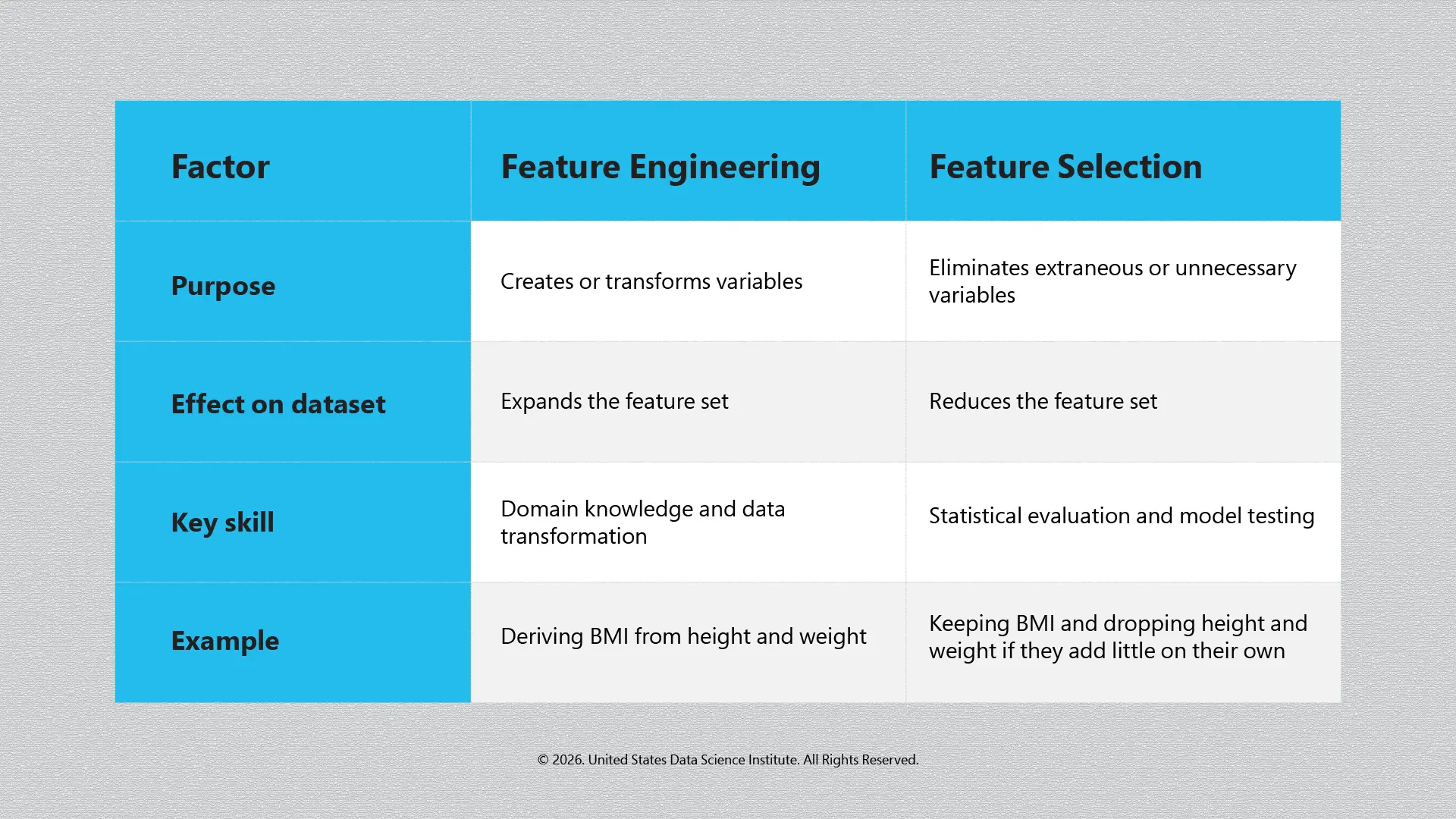
Feature Engineering vs. Feature Selection
The two processes complement each other but play different roles in a machine learning pipeline. The table below outlines their differences in detail.
Feature Engineering Techniques For Data Scientists
A small set of established techniques covers most feature engineering work on structured data. Each one resolves a specific problem in raw data before it reaches the model.
Handling Missing Values
Instead of dropping incomplete rows, gaps are filled using the mean or median or estimated from similar records with methods like KNN imputation.
Encoding Categorical Variables
One-hot encoding works for unordered categories, ordinal encoding for ranked ones like education level, and target encoding for variables with many unique values.
Scaling and Normalization
Standardization and min-max scaling bring features like age and income to a comparable range, which matters for distance-based algorithms such as KNN and SVM.
Creating Interaction and Polynomial Features
Multiplying features or adding squared terms helps models, especially linear ones, capture relationships that single variables miss.
Also Read: 5 Popular Python Scripts for Feature Engineering by USAII®
See these techniques in action with ready-to-use Python scripts for encoding, numerical transformation, feature interactions, datetime extraction, and automated feature selection.
Feature Selection: Three Techniques Involved
Feature selection methods fall into three main categories, each balancing speed against accuracy differently. The right choice depends on dataset size, the number of features, and the computing resources available. The top 3 methods are given below.
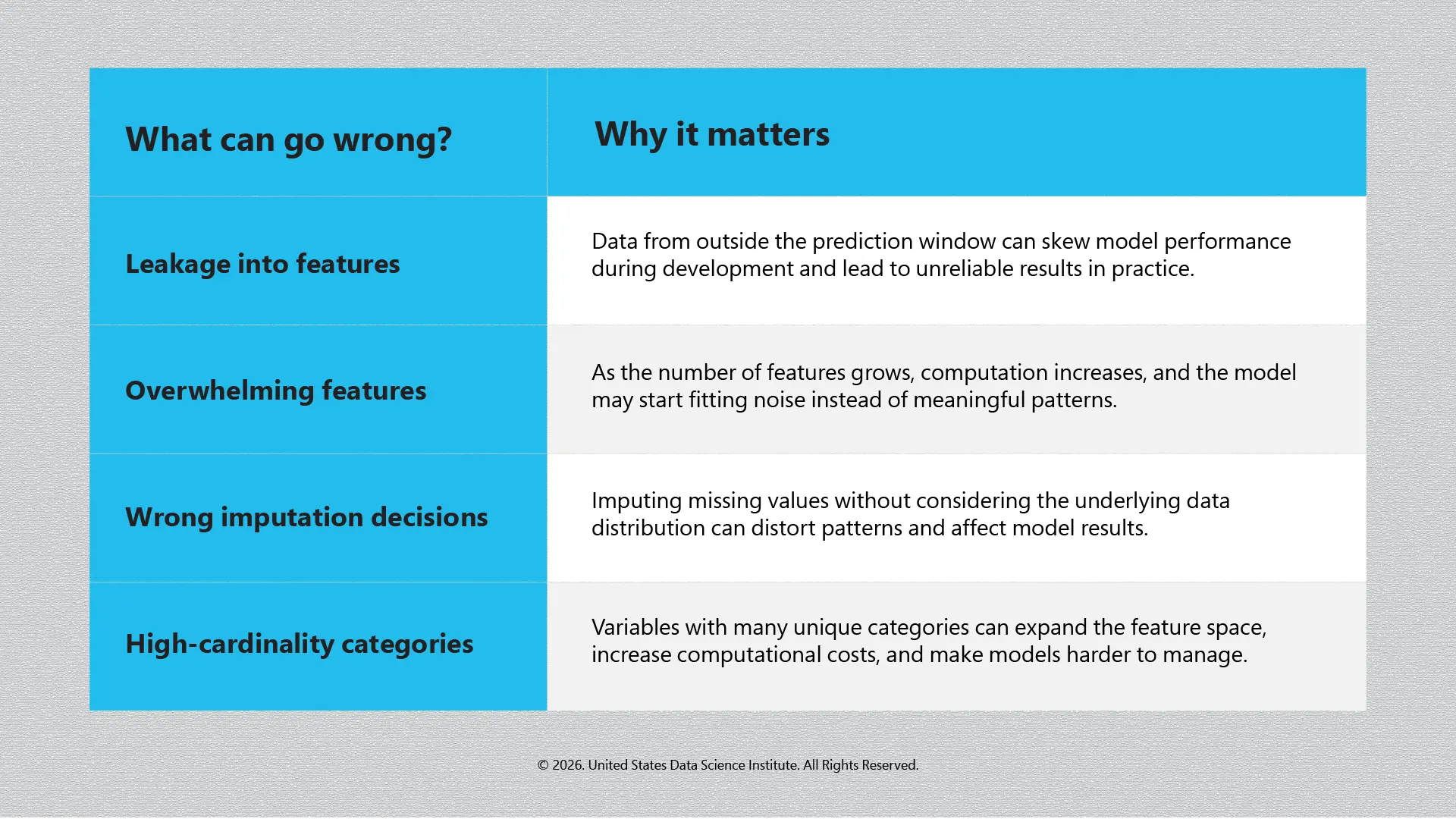
Where Feature Pipelines Can Go Wrong
Feature-related errors rarely show up during development. They tend to surface after deployment, when a model that tested well starts failing on real data. Some of the common mistakes to look for are:
Best Practices for Feature Engineering and Selection
There are a few practices that have proven effective for building dependable feature pipelines. These are applicable to almost all the data sets and modeling techniques.
Building Feature Engineering Skills with USDSI®
Proficiency in feature engineering comes from consistent application, from preparing data to measuring how each feature influences model outcomes. A structured certification offers a clear framework for developing this expertise.
The USDSI® Certified Lead Data Scientist (CLDS™) is designed for experienced practitioners and covers advanced topics including data analytics, machine learning, deep learning, and NLP.
For those stepping into leadership, the USDSI® Certified Senior Data Scientist (CSDS™) extends this technical base to data science decision-making at the organizational level.
What Follows Next?
As the use of real-time data increases in machine learning systems, feature engineering has started evolving from being a one-time exercise to an ongoing task. A few shifts stand out:
For data scientists, mastering feature engineering is now a long-term skill that shapes how reliable machine learning systems are in practice.
FAQs
What emerging job roles focus specifically on feature engineering?
Roles like feature engineer and ML data engineer have become increasingly common as organizations formalize this work as a distinct specialization.
Which Python libraries are most used for feature engineering?
pandas and scikit-learn handle most everyday tasks, while libraries like Featuretools and category_encoders support automated feature creation and advanced encoding.
Can feature engineering affect model interpretability?
Yes. Complex derived features can make model behavior harder to explain than the original variables.
This website uses cookies to enhance website functionalities and improve your online experience. By clicking Accept or continue browsing this website, you agree to our use of cookies as outlined in our privacy policy.