Most organizations now treat data pipelines as core infrastructure, not a background IT task, yet keeping them reliable remains a persistent problem. Fivetran's Enterprise Data Infrastructure Benchmark Report 2026 found that 97% of enterprises report disruptions to AI or analytics initiatives due to pipeline issues, and data teams spend 53% of their engineering time on maintenance instead of building anything new.
That gap between how much organizations invest and how reliable their pipelines actually are says a lot. It is why architecture and deployment discipline end up mattering more than which tool a team picks.
About Modern Data Pipelines
A data pipeline moves data from its source through a set of processing steps until it lands somewhere it can actually be used, typically involving ingestion, transformation, validation, and delivery to a warehouse, lake, or downstream application.
The real difference between modern pipelines and older ETL scripts comes down to one thing: modern pipelines run continuously and adjust as conditions change, rather than firing off a fixed sequence once and calling it done.
Key Elements of Modern Data Pipeline Architecture
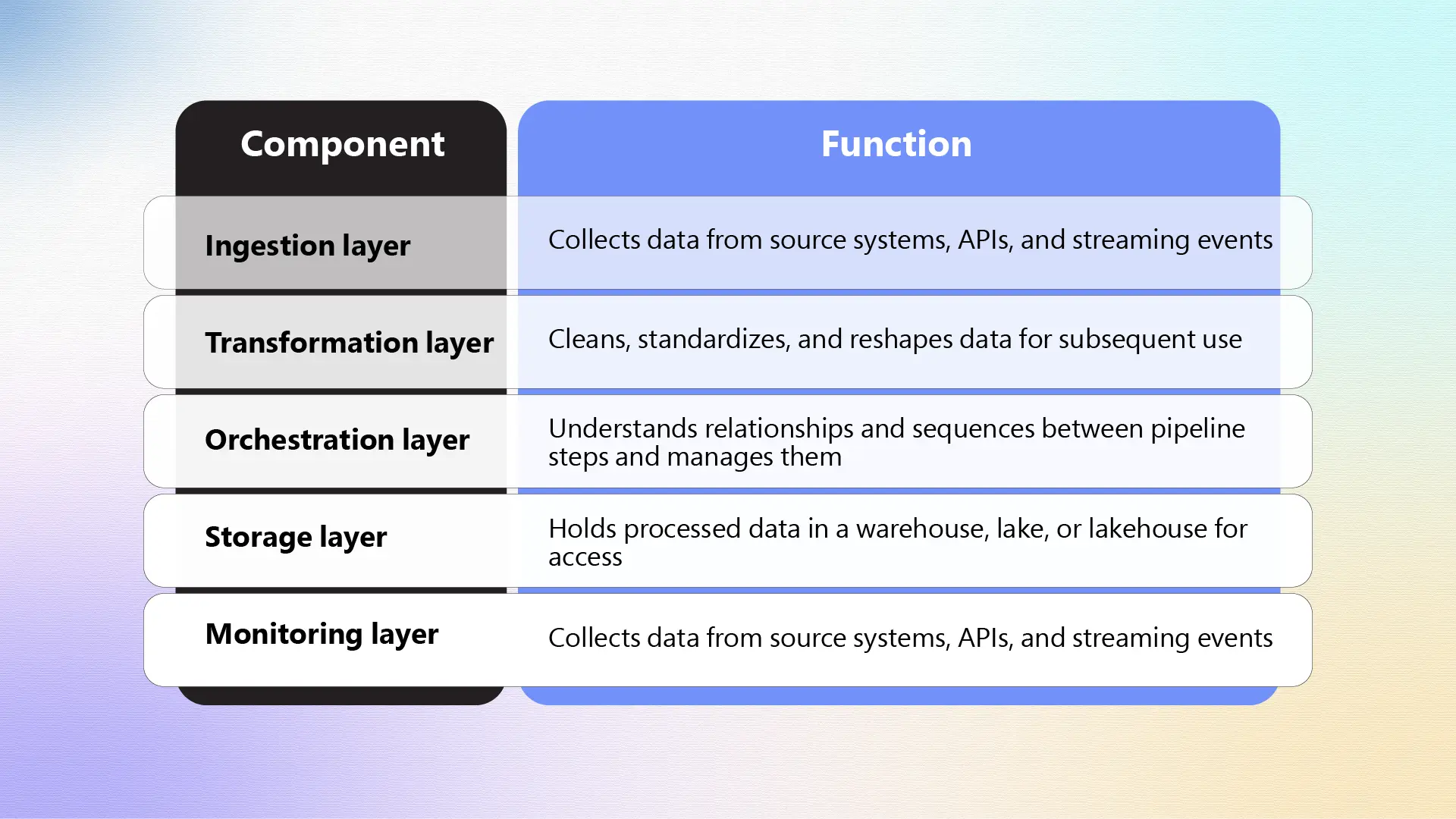
A well-designed pipeline architecture generally includes these components:
How to Build a Modern Data Pipeline
Building a pipeline from scratch usually follows a fairly consistent sequence as mapped out below.
Top Data Pipeline Best Practices
A pipeline that actually holds up under production conditions needs a handful of practices built in from the start, as given below.
Pipelines should handle growth in data volume and source count without needing a full rebuild. That usually means using distributed processing frameworks and avoiding assumptions baked in around data size.
Run validation checks at every stage, not just at the end. Catching a bad record right at ingestion costs a lot less than catching it after it's already corrupted a report someone downstream is relying on.
Pipelines break; that is just reality. What matters is catching it right away instead of finding out three days later because a dashboard looks off. Automated alerts on latency, volume anomalies, and failed jobs handle that.
Pipelines often carry sensitive data across systems. Encryption in transit and at rest, plus strict access controls, needs to be part of the design from the beginning, not something bolted on afterward.
Manual deployment adds risk and slows everything down. Running CI/CD practices on data pipelines the same way they're run on application code catches problems before they hit production.
Deployment Considerations for Modern Data Pipelines
A few deployment decisions end up shaping how reliable and cost-efficient a pipeline is long after launch. A few considerations to look for:
As AI systems lean more heavily on the data flowing through these pipelines, deployment decisions carry more weight than they used to. USDSI's analysis on whether AI is rewriting the data stack looks at how enterprise data architecture is shifting in response, worth a read for any team rethinking their pipeline strategy.
Final Thoughts
Reliable data pipelines are no longer a background technical concern. They directly determine whether AI initiatives succeed, whether the resulting analytics can be trusted, and whether data teams are able to focus on building new capability rather than resolving recurring failures.
Professionals looking to build real expertise here need more than familiarity with a handful of tools;, they need a solid grounding in data architecture and pipeline design. USDSI's data science certifications help professionals upskill in architectural and engineering fundamentals that keep modern data systems reliable at scale. Begin your learning journey today.
FAQs
What is the most common reason data pipelines fail in production?
Schema changes at the source, like a renamed column or altered data type, cause most pipeline failures.
How do teams decide between building a pipeline in-house versus using a managed platform?
It usually comes down to team size and maintenance capacity; managed platforms suit lean teams, and custom builds suit highly specific needs.
Can a single pipeline architecture serve both analytics and AI use cases?
Often yes, though AI workloads typically need lower latency and stricter data freshness than standard analytics.
This website uses cookies to enhance website functionalities and improve your online experience. By clicking Accept or continue browsing this website, you agree to our use of cookies as outlined in our privacy policy.