As a core component of data's role in modern data teams, data transformation is a discipline that's taken center stage, and dbt Labs' State of Analytics Engineering Report 2026 indicates that the importance of increasing trust in data and data teams grew to 83% in 2026. This change has meant that the scheduling, testing, and governance of a team's transformation tooling are no longer just about how quickly it runs but also how well it is.
This means that the decision between dbt Core and dbt Cloud is not a matter of implementation but a significant choice any team is making when they are building their transformation layer from scratch.
What Is dbt and Why It Matters for Data Transformation
dbt (data build tool) allows analytics engineers to write version-controlled, test SQL code within the data warehouse to perform data transformations. It introduces software-engineering discipline, software testing, software modularization, and documentation to a data layer that previously ran on ad hoc scripts on individual analysts' machines. dbt's interesting aspect is its ability to both share this same underlying transformation logic and also to run, schedule, monitor, and make it visible to the rest of the organization.
dbt Core: Overview and Key Features
dbt Core is the base of the entire dbt ecosystem, a free and open-source command-line tool. It is installed locally or on each team's own infrastructure and provides complete control of scheduling, version control, and deployment decisions. Key features include:
dbt Cloud: Overview and Key Features
dbt Cloud is a web-based platform for dbt Labs, a managed platform for dbt Core. It integrates a hosted development environment. Some of the key features include:
These capabilities can often save valuable engineering time in building and maintaining separate scheduling and hosting infrastructure in a core-only configuration.
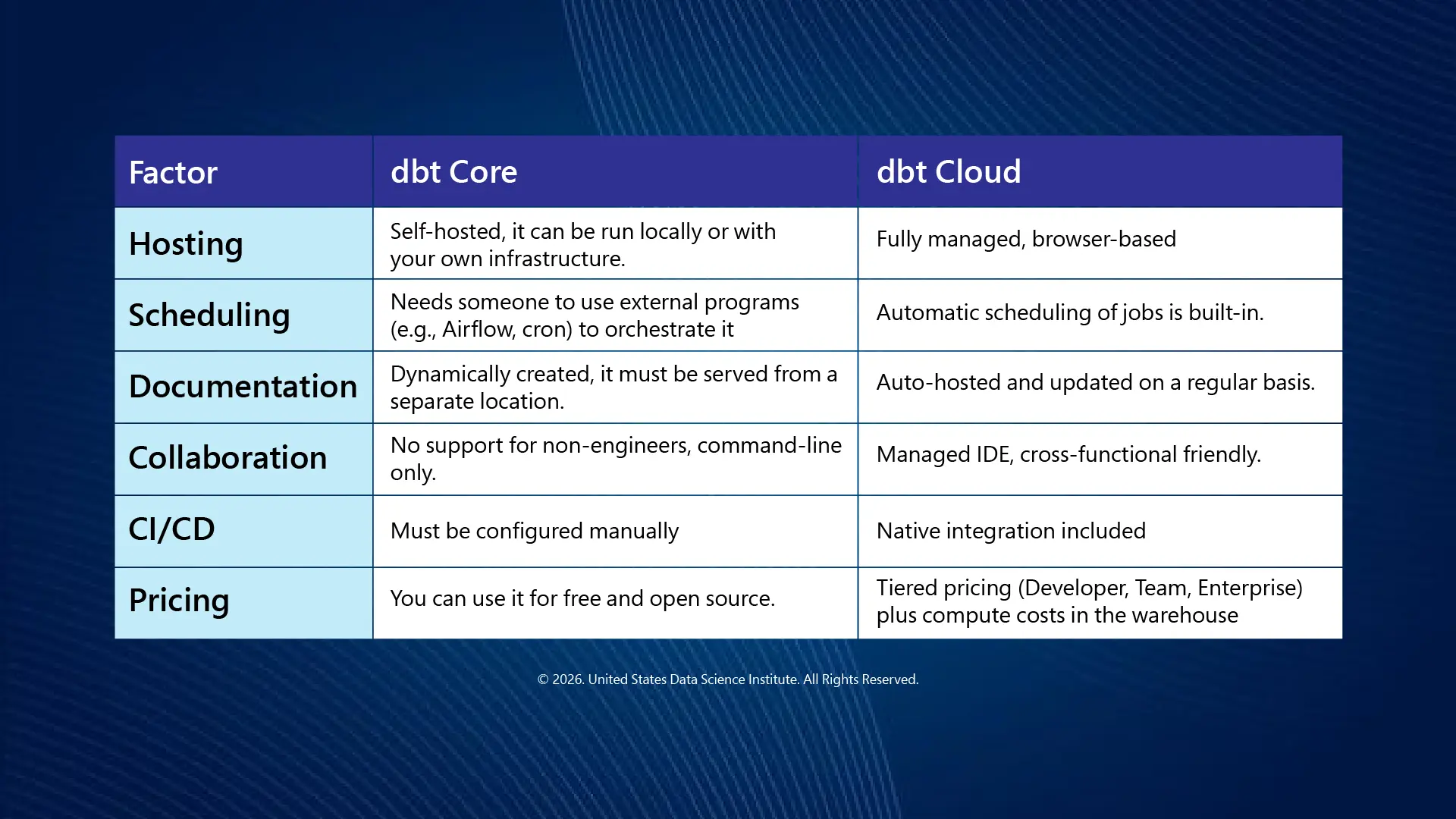
dbt Core vs dbt Cloud: Key Differences
The two options diverge across several practical dimensions that tend to matter most once a team moves past initial evaluation and starts planning for real, ongoing use. The key differences are listed below.
Which Option Fits Your Team?
The decision between the two depends on the maturity of the teams, the infrastructure offering, and the level of setup effort the team is willing to perform themselves. There are some patterns that recur:
Upskilling for Modern Data Transformation Workflows
Choosing the right tool matters less in isolation than knowing how to use either one well within a broader, well-governed data workflow. USDSI's data science certifications catering to early career professionals to senior leaders focus on the data pipeline, transformation, and analytical skills that go hand-in-hand with the data tools, such as dbt, in a real production environment.
For a closer look at how transformation tools like dbt fit into the broader discipline of managing data reliably at scale, USDSI's DataOps vs. DevOps piece breaks down how these twin disciplines shape modern data and digital transformation work more broadly.
Conclusion
dbt Core and dbt Cloud are designed for different phases of team maturity and different operational priorities, and the decision will depend on where a team is today. The choice itself is less important than understanding the trade-offs well before committing because there will be a real migration cost after making the switch, both in terms of time and engineering effort. Teams that do this intentionally and thoughtfully, rather than under a looming deadline, are more likely to develop transformation workflows that are flexible and scalable as the volume of data increases.
FAQs
Can a team migrate from dbt Core to dbt Cloud later without rebuilding everything?
Yes, since both run on the same underlying dbt project structure, migration typically involves connecting existing code rather than starting over from scratch.
Does dbt Cloud require warehouse compute costs on top of its subscription fee?
Yes, warehouse compute is billed separately by the cloud data warehouse provider, in addition to dbt Cloud's own subscription tier.
Is prior software engineering experience necessary to use dbt Core effectively?
Some command-line and version control familiarity helps significantly, since dbt Core assumes teams will manage their own orchestration and deployment.
This website uses cookies to enhance website functionalities and improve your online experience. By clicking Accept or continue browsing this website, you agree to our use of cookies as outlined in our privacy policy.