Organizations deal with unstructured text data daily, such as customer reviews, survey responses, support tickets, emails, and social media communications. Manual data processing is impractical and unscalable. So, sentiment analysis comes into the picture. Machine learning and NLP can help organizations identify opinions, emotions, and intent in the text to provide teams with the visibility necessary to respond quickly and accurately to customer feedback.
What Sentiment Analysis can do has shifted considerably over the past few years. Large Language Models (LLMs) brought a different level of sophistication to the field. Older rule-based systems matched keywords and patterns; LLMs interpret meaning. They account for context, detect tone, and reprocess nuance in ways earlier tools simply could not. High-volume conversational data that once required weeks of manual review can now be analyzed at scale, with accuracy that holds up across industries.
Reputation monitoring, customer experience programs, and trend detection have all been reshaped by this shift. The 2026 Zendesk CX Trends Report found that 85% of customer experience leaders consider a single unresolved issue sufficient reason to lose a customer. At that level of sensitivity, understanding what customers are saying and why is not optional. It is a core operational requirement.
Across industries, sentiment analysis has moved from an experimental capability to a standard component of business intelligence. Whether applied to market research, risk monitoring, or real-time customer experience management, the technology enables organizations to treat everyday conversations as structured data and act on it.
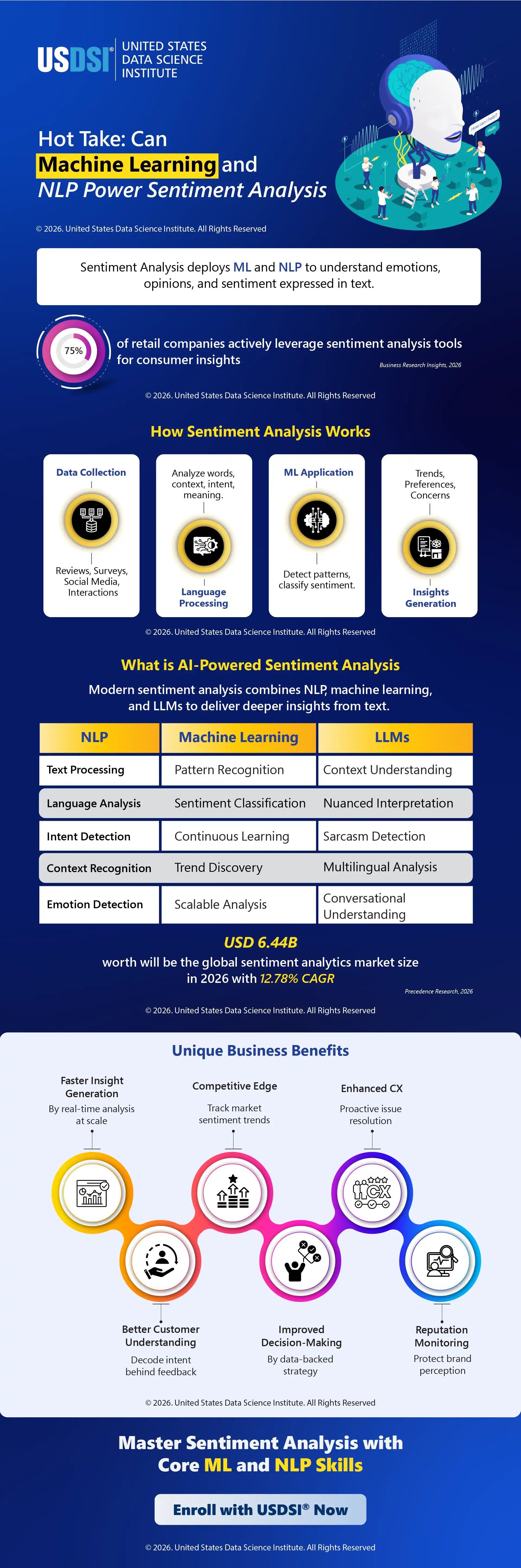
The infographic below breaks down how Machine Learning, NLP, and Large Language Models work in combination to decode human sentiment and inform better decisions.
This website uses cookies to enhance website functionalities and improve your online experience. By clicking Accept or continue browsing this website, you agree to our use of cookies as outlined in our privacy policy.