
Data science has become the core of decision-making in almost all companies across industries worldwide. In fact, McKinsey believes nearly 88% of organizations have adopted AI and data science into their business operations in some form or another.
Every single click, transaction, online interaction, sensor reading, security generate, and even the time you are spending reading this generates huge volumes of data. And this data is a precious asset for organizations in data-driven decision-making.
However, the raw data alone has no value unless it is properly collected, processed, secured, and delivered for analysis through proper data pipelines.
Data engineering is the technology that helps translate raw data into structured and clearly formatted data that can be used for analysis, making this data science job one of the fastest-growing jobs in the world.
What is Data Engineering?
Data engineering is the branch of data science dedicated to designing, building, and maintaining systems or pipelines to collect, store, process, and deliver data for further use.
The Global Data Engineering Services market is estimated at $105.39 billion in 2026, projected to grow at a CAGR of 15.12% to reach $213 billion by 2031, according to Mordor Intelligence.
Data engineers create the foundational infrastructure for data analytics, machine learning, and AI.
Though most of the data science roles are responsible for translating data into insights, data engineers ensure data is clean, accurate, reliable, and easily accessible whenever needed.
As per Indeed, the average salary for a data engineer is $135,654 per annum in the US.
Data Engineer vs Data Scientist vs Data Analyst
Role of these data science professionals are interconnected, but they are responsible for different tasks:
So, without data engineers in the first place, data scientists and analysts will not have clean data that they can work with.
Why is Data Engineering the Fastest-Growing Tech Career?
If you are looking to get into a data science career, then 2026 is the year full of opportunities. Several factors make data engineering one of the fastest-growing tech jobs in the world, such as:
By 2026, 230-240 zettabytes of data will be generated, as reported by multiple sources, including IDC. Cloud applications, IoT devices, mobile apps, and online activities all generate huge amounts of data every second, and it requires specialized data engineering skills to manage this complex data.
Gartner estimates that by 2026, 60% of data used for AI and analytics will be synthetic, as engineers seek to bypass privacy hurdles and data scarcity.
AI and ML have moved from experimentation to production, with organizations of all scales and sizes readily adopting AI into their business operation. Poor data pipelines can lead to inaccurate models and biased outputs. Therefore, companies invest heavily in skilled data engineers.
As organizations are moving to cloud-native architectures, the demand for professionals who can manage data lakes, warehouses, and streaming platforms has increased tremendously.
The demand for experienced data engineers has increased rapidly in the past few years, but the supply remains stagnant, creating a huge skill gap. This talent gap has made data engineering one of the most sought-after data science job roles in the technology job market.
What Does a Data Engineer Do?
If you aspire to get into this data science career path, then here is a brief overview of their day-to-day roles and responsibilities:
They also work closely with software engineers, data scientists, data analysts, and cybersecurity teams for impactful work.
What Skills Are Needed to Become a Data Engineer?
Core technical skills:
Big data and streaming technologies:
Cloud Platforms:
DevOps, Security, and Governance Skills:
These essential data science skills and knowledge will help you get into and grow into this data science job faster.
Career Path in Data Engineering
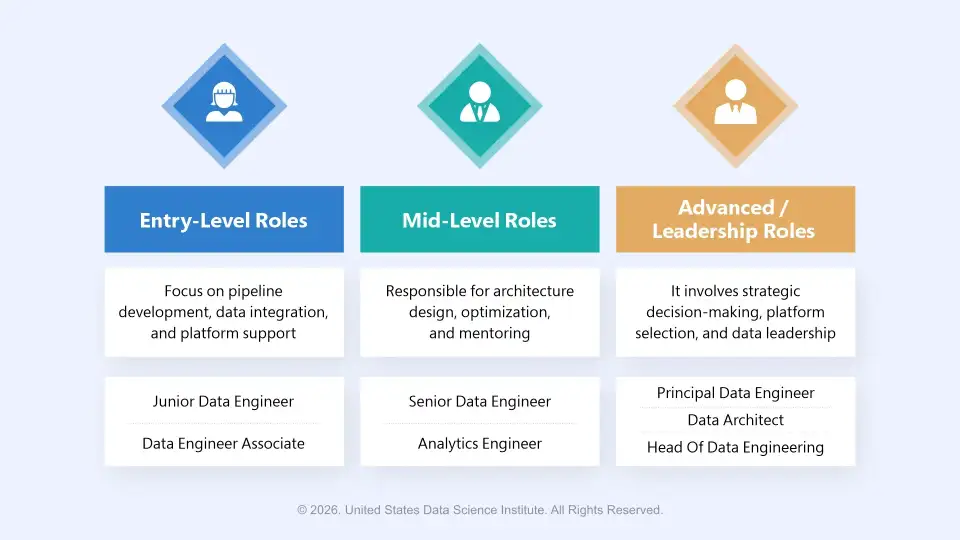
Start a Career in Data Engineering
For those looking to excel in this data science career path, it is recommended to have essential educational qualifications and data science skills in place. Here is a simple roadmap that you can follow:
Candidates with degrees in computer science, mathematics, or engineering can easily enter this field. But many successful data engineers also come from non-technical backgrounds. This means skills matter more than degrees.
Once you have the prerequisite qualifications, you can go for learning the data science skills that we discussed above. Leverage data science courses, certifications, and bootcamps to master these in-demand skills.
Employers highly prefer candidates with recognized data science certifications under their belt. These credentials not only help you gain relevant skills but also validate your expertise in a particular domain.
With trusted names such as USDSI®- its online and self-paced data science certification program – the Certified Data Science Professional (CDSP™) will help you master the foundational concepts through comprehensive study materials, including eBooks, lecture videos, and practice codes. Recognized by employers across industries worldwide, USDSI® certification can truly amplify your data engineering career prospects.
Another important thing that helps get jobs faster is practical experience. So, work on your own data science projects, contribute to open-source programs, build pipelines, work with open datasets, and showcase your data engineering skills in a documented way to employers.
Future of Data Engineering: What Lies Ahead
Often, people discuss that the field of data engineering has become obsolete, and automated data science tools can replace humans from data engineering jobs. Here’s the reality check:
Of course, automated and AI-powered data science tools are making pipeline development easier, but they are also increasing expectations for scale and reliability. This makes skilled data engineers even more valuable in the future.
Data engineering is increasingly converging with AI engineering and MLOps. So, the new hybrid roles are being created that require professionals to look after both data and model pipelines.
As the data regulations around the globe are becoming stricter, data engineers will have to focus more on data security and governance apart from their regular data infrastructure work.
90% of organizations say their privacy programs have expanded due to AI adoption, increasing demand for structured, governed data pipelines (Source: Cisco 2026 Data Privacy Study).
Final thoughts!
Now the important question arises –
Is a data engineering career right for you?
Well, if you plan to solve complex technical problems, working behind the scenes on critical systems, and want to build scalable solutions, then this can be the right career path for you. It is not just rewarding, but also offers greater flexibility and faster growth opportunities.
At the end, data engineering is the backbone of the modern digital economy. Organizations are investing heavily in AI, analytics, and cloud infrastructure. Thus, the demand for skilled data engineers is only going to increase in the future.
If you want a high-growth future-proof tech career, then enroll in CDSP™ certification, build a strong foundation, and get started with your data engineering journey with confidence.
Frequently Asked Questions
Yes. Data engineering demand continues to grow due to AI adoption, cloud migration, and real-time analytics across industries.
With consistent learning and hands-on projects through world’s most trusted data science certifications from USDSI® among others, can enable you to master core skills within 5 months.
No, but understanding how data supports ML pipelines helps data engineers collaborate effectively with AI and data science teams.
Yes. Strong programming skills, especially in Python and SQL, are essential for building and maintaining data pipelines.
This website uses cookies to enhance website functionalities and improve your online experience. By clicking Accept or continue browsing this website, you agree to our use of cookies as outlined in our privacy policy.