Data lakehouse architecture has moved from a niche engineering idea to the default choice for enterprise data infrastructure. Gartner reports visualizing 65% adoption of lakehouses among its client base through 2026. A number that reflects just how quickly this architecture has become the standard rather than the exception.
Dresner Advisory Services' 2026 research found that data lake adoption jumps from 42% to 62% among organizations with advanced AI maturity, underscoring how tightly unified data platforms are now tied to AI initiatives. This connection between AI maturity and lakehouse adoption is exactly what makes this architecture worth understanding in depth.
What is a Data Lakehouse?
A data lakehouse combines the low-cost, flexible storage of a data lake with the structure, governance, and performance capabilities of a data warehouse. It stores raw, semi-structured, and structured data in one place while still supporting reliable, warehouse-style querying and transactions on top of that same data.
Emergence of Data Lakehouses
Neither older architecture fully solved modern data needs on its own. As listed below, it shows the importance of the data lakehouse compared to the warehouse and data lakes.
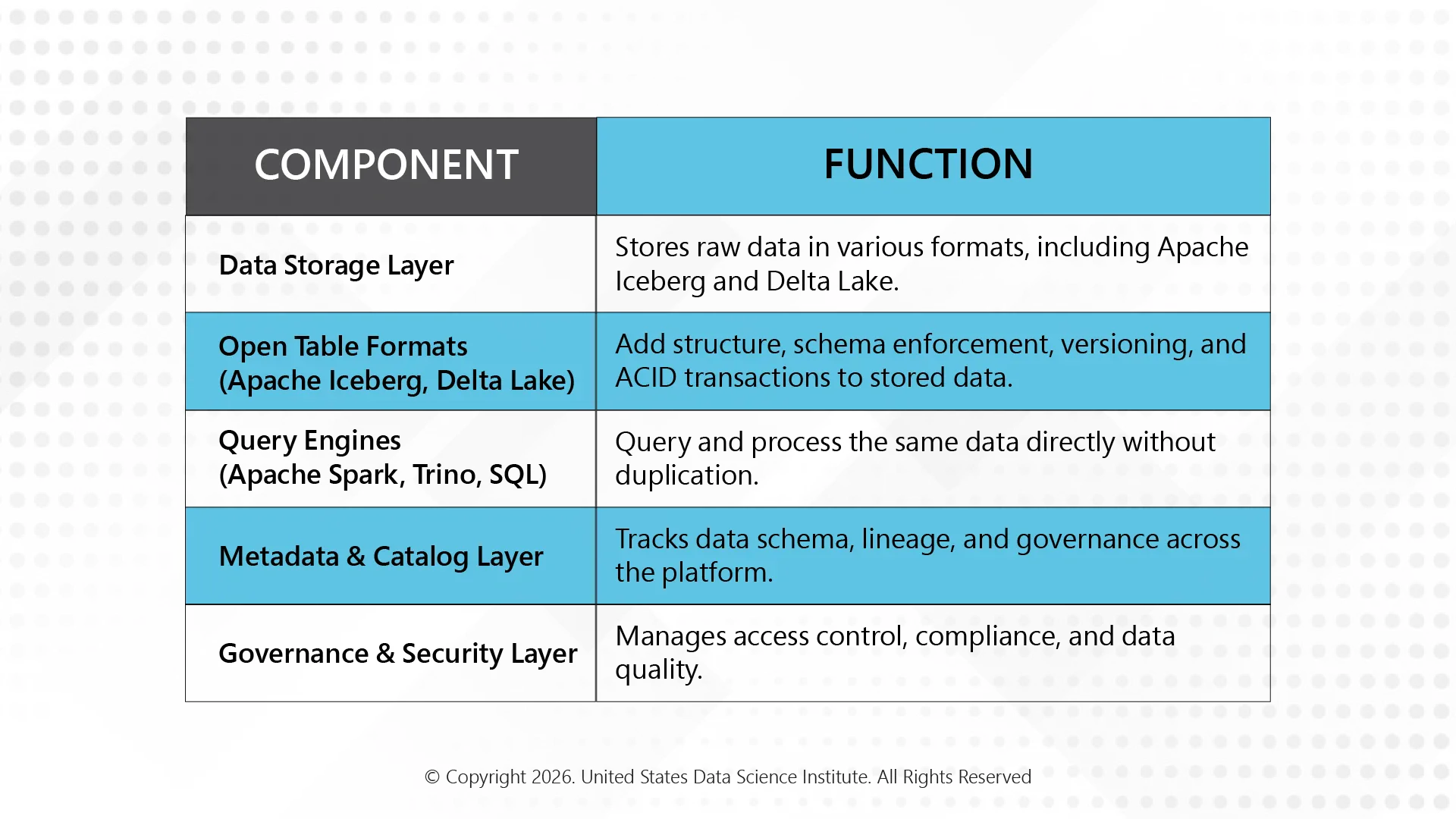
Components of Data Lakehouse Architecture
The typical layers of a working lakehouse work to fill gaps in earlier architectures.
How Data Lakehouse Architecture Powers Modern AI Platforms
AI workloads typically need two things that used to require separate systems: raw, high-volume data for model training and structured, governed data for reliable analytics. A lakehouse supports both from a single copy of data, removing the need to duplicate information across separate platforms for AI and business intelligence.
This is precisely why AI and machine learning workloads are increasingly running directly on lakehouse infrastructure rather than through separate, duplicated pipelines. When the same governed dataset can serve both a dashboard and a model training pipeline, organizations avoid the cost, complexity, and inconsistency that comes with maintaining parallel data copies.
Key Technologies Behind Modern Lakehouse Architecture
Best Practices for Data Lakehouse Implementation
As enterprise data architecture continues shifting to accommodate AI at scale, understanding where lakehouse design fits into that broader picture matters. USDSI's analysis on whether AI is rewriting the data stack examines how enterprise data architecture, including lakehouse adoption, is evolving to meet AI's growing demands, a worthwhile read for teams planning their next data infrastructure move.
Conclusion
Data lakehouse architecture has moved past being an emerging trend and become the standard most enterprises are building toward, driven largely by AI workloads that require both flexible raw data and governed, reliable structure from the same underlying system. Organizations that get the architecture right early tend to avoid the costly re-platforming that comes with retrofitting AI capabilities onto legacy warehouse or lake systems later on.
FAQs
Do small and mid-sized companies need a data lakehouse, or is it only relevant for large enterprises?
No, cloud-based lakehouse tools have lowered the cost of entry enough that smaller companies with growing AI workloads benefit as well.
What skills do data professionals need to work with lakehouse architecture?
Familiarity with SQL, distributed computing frameworks like Spark, and at least one open table format such as Iceberg or Delta Lake.
Does a data lakehouse replace the need for a data engineer?
No, lakehouse architecture still requires data engineers to manage pipelines, governance, and performance, though it reduces some duplicated infrastructure work.
This website uses cookies to enhance website functionalities and improve your online experience. By clicking Accept or continue browsing this website, you agree to our use of cookies as outlined in our privacy policy.