
Statistical literacy is essential for making sure that a data analyst believes in his estimation and is not just generating it. While the output may appear correct, if the data is wrong at the start, the company will use it to make wrong decisions.
To comprehend the data’s behavior, one has to do more than just know the five possible variants of regressions. As the statistical literacy goes beyond just one concept it involves judgment regarding hypothesis that is whether to accept or reject the findings is only formed after one analyzes data multiple times and asks questions regarding the initial conditions needed for result acceptance. While the profession is rapidly evolving, the gap between the usage of basic tools and theoretical statistical knowledge can be a challenge.
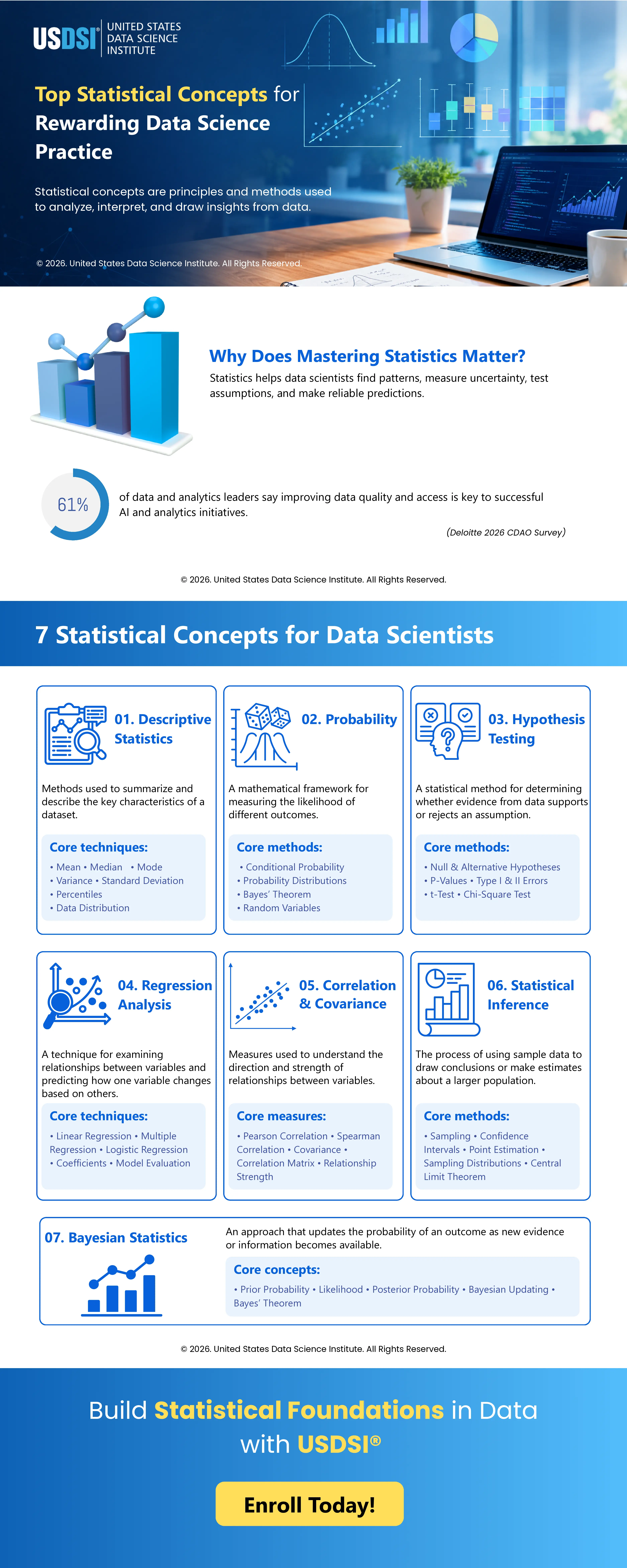
USDSI’s certifications in data science are grounded in theoretical foundations, combining statistics and practical machine learning, and this means that professionals can learn both areas at once. The infographic presents examples of the basic statistical concepts that make that every data scientist should master to upskill their data science career in 2026.
This website uses cookies to enhance website functionalities and improve your online experience. By clicking Accept or continue browsing this website, you agree to our use of cookies as outlined in our privacy policy.