Data ethics sounds simple enough on paper, then gets complicated fast once real data enters the picture. Gartner predicts that by 2028, 50% of organizations will adopt a zero-trust posture for data governance, driven by the growing volume of unverified, AI-generated data flowing through corporate systems.
"Organizations can no longer implicitly trust data or assume it was human generated," said Wan Fui Chan, Managing VP at Gartner "As AI-generated data becomes pervasive and indistinguishable from human-created data, a zero-trust posture establishing authentication and verification measures is essential to safeguard business and financial outcomes."
As data science keeps taking on a bigger role in how companies make decisions, applying ethical principles consistently, and knowing which data can actually be trusted matters more than it used to. Let us discuss in detail.
What is Data Ethics?
Data ethics covers the principles behind how data gets collected, stored, analyzed, and used, touching on fairness, transparency, consent, and accountability across the whole data lifecycle. It is not the same thing as compliance. Following the law is the floor, not the ceiling, and ethical data use often means making calls the law simply has not been highlighted.
Also read about Why Data Science Has Become Central to Modern Business
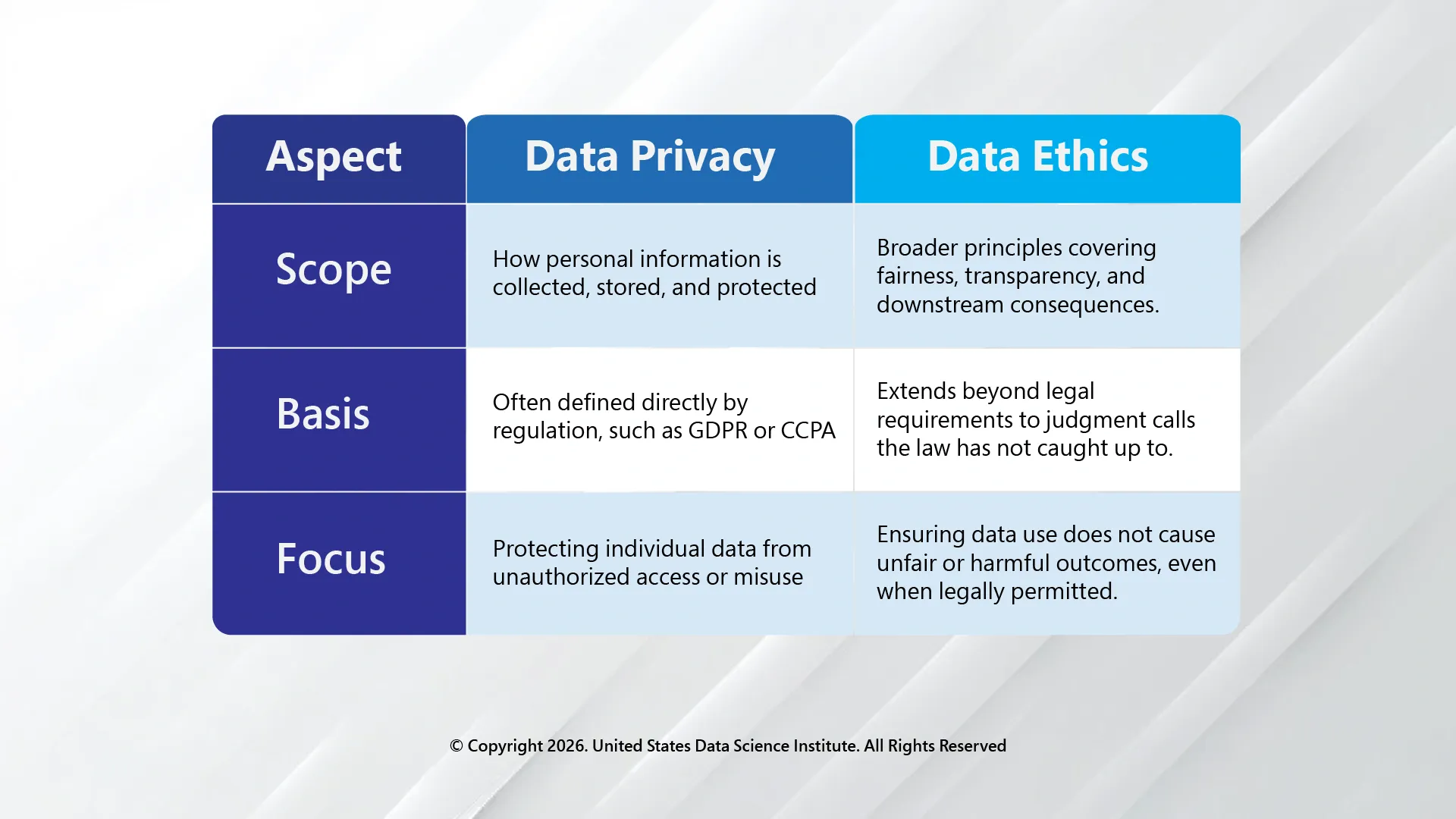
Data Ethics vs. Data Privacy: What's the Difference?
Privacy and ethics are used interchangeably a lot, but they answer different questions: one is about protection, the other is about consequences. Listed below are the key differences.
Core Principles to Apply for Responsible Data Use
In order to have responsible use of data, organizations and leaders should apply some core principles as listed below.
Common Data Ethics Challenges in Practice
Knowing the principles is one thing. Running into the real-world messiness that makes them hard to apply is another. Here is where most organizations actually get stuck.
How to Apply Data Ethics in Real Decisions
A few widely referenced approaches include the following.
Building Data Ethics into Organizational Practice
Turning these principles into practice requires structured governance and data science professionals who actually know how to apply them. USDSI's Certified Senior Data Scientist (CSDS™) helps build leadership-level responsibility, covering advanced data strategy, governance, and organizational decision-making, which is useful for leaders responsible for how data ethics gets built into an organization's broader data practices.
Data ethics only works when it is integrated into everyday decisions instead of being in policy documents. As data science continues to shape more of how organizations run, the businesses getting real value out of their data are increasingly the ones treating ethical application as a leadership responsibility, not something handled after the fact.
FAQs
Do data science job postings require data ethics-specific skills?
Yes, more postings now list responsible AI, bias testing, or governance experience as a requirement rather than a nice-to-have.
Is data ethics becoming a distinct job function within companies?
Yes, roles like Data Ethics Officer and AI Governance Lead are increasingly appearing as standalone positions rather than being folded into broader compliance or legal teams.
Does data ethics apply differently to structured versus unstructured data?
Yes, unstructured data like text and images often carries harder-to-detect bias and requires more deliberate review than clean, structured datasets.
This website uses cookies to enhance website functionalities and improve your online experience. By clicking Accept or continue browsing this website, you agree to our use of cookies as outlined in our privacy policy.