
Few disciplines have moved from niche to essential as quickly as data science. What started as a specialized function inside large tech companies now sits at the center of decision-making across nearly every industry, from how hospitals plan patient care to how retailers price products in real time.
The scale of that shift shows up clearly in the numbers. U.S. News & World Report ranks data science 4th among Best Technology Jobs and 8th in its 100 Best Jobs list for 2026. According to Robert Half's 2026 Salary Guide, Data Scientist ranks among the technology roles experiencing the highest sustained demand over the past 12 months, with starting salaries ranging from roughly $120,000 to $180,000 or more, putting it on par with AI/ML Engineer and Data Engineer as some of the best-compensated entry points in tech.
The global data science platform market itself is valued at approximately USD 203.53 billion in 2026, according to Precedence Research, underscoring just how much enterprise investment is following that demand.
What Makes Data Science Critical Today
Data science combines statistics, programming, and domain expertise to turn raw data into decisions. What has changed in recent years is not the core discipline itself, but its reach.
Functions that once relied on intuition or static reporting, marketing, supply chain planning, fraud detection, and hiring now run on continuously updated, data-driven models built using established data science techniques.
A few shifts explain why this happened so quickly:
Where Data Science Works Across Industries
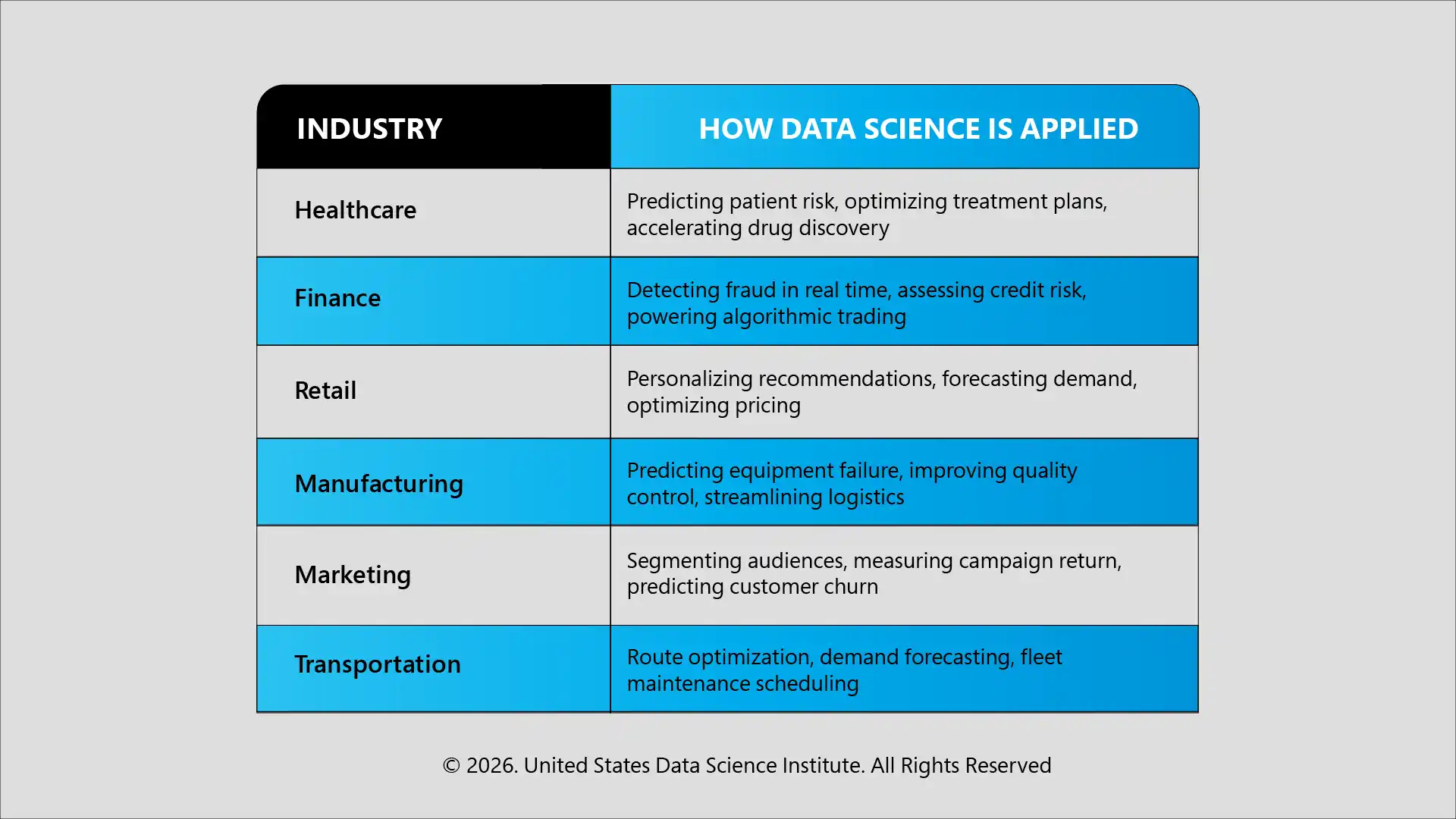
Data science has become embedded in the core operations of nearly every major industry, as outlined below.
Why Decision-Making Has Shifted Toward Data
There are a couple of forces driving this change, as listed below:
Looking further ahead, this shift is only expected to deepen. USDSI®'s AI and Data Science Outlook Beyond 2026 explores how this trajectory continues to unfold as AI and data science become even more deeply embedded into core business strategy.
What This Means for Data Science Professionals
Data science is not only currently trendy but also essential for the functioning of organizations. The reliance on such skills is changing who requires them. Analysts, engineers, and managers with a data scientist in their title all need to have strong skills in machine learning, Python or R programming, and statistical analysis.
With the constant change of tools and techniques, upskilling is no longer an option. USDSI® offers vendor-neutral data science certifications that provide a structured way to build these data science skills and stay ahead in the evolving job market.
This transformation is not being driven by data scientists alone. Few closely related roles are shaping it just as directly:
Top 5 Roles Driving the Data Science Transformation
The Bigger Picture
Data science is not a passing trend tied to a single technology cycle. It is a structural shift in how organizations make decisions, one that is reshaping job descriptions, business strategy, and competitive advantage across nearly every sector. As the market continues to expand through 2026 and beyond, the organizations and professionals who treat data literacy as a core skill, not a specialized add-on, will be the ones best positioned to keep up.
FAQs
Is data science only relevant for tech companies?
No, data science is now applied across healthcare, finance, retail, manufacturing, and other traditional industries, not just technology firms.
Is Python or R better for someone starting out in data science?
Python is generally the better starting point, given its broader use across machine learning, automation, and general-purpose programming.
Can someone switch into data science from a non-technical background?
Yes, professionals from finance, marketing, or operations often transition successfully by building statistics and programming skills through structured, beginner-focused training.
This website uses cookies to enhance website functionalities and improve your online experience. By clicking Accept or continue browsing this website, you agree to our use of cookies as outlined in our privacy policy.