SQL and graph databases address fundamentally different challenges, and most big data teams eventually reach a limitation that neither technology resolves on its own. Structured, transactional data sits within a relational database. Deeply interconnected data, accounts linked through shared devices, and users connected through mutual purchases Graph databases have moved well past niche status in response.
“The global graph database market at USD 3.60 billion in 2026, growing at a 24.15% CAGR through 2035.”
Precedence Research
This boost is largely driven by enterprises requiring hassle-free management of increasingly interconnected data for fraud detection, recommendation systems, and complex digital workflows.
This stupendous growth does not mean SQL is outdated. It means more organizations are running both side by side, letting each database handle the specific job it is actually good at instead of forcing one tool to do everything.
What SQL Databases Do Well
SQL databases such as PostgreSQL handle structured, transactional data effectively: orders, inventory, financial records, and anything requiring consistency and predictable relationships between fixed fields. A relational schema enforces structure upfront, which keeps reporting, aggregation, and standard business queries fast and reliable.
Where SQL begins to struggle is with deeply connected data. A query asking for all customers linked to a given customer through three or more shared transactions requires multiple JOIN operations that grow more slowly and more complex with each additional hop. This is precisely the type of query relational databases were not designed to handle efficiently.
What Graph Databases Do Well
Graph databases like Neo4j store data as nodes and relationships instead of tables and rows, which makes relationship-heavy queries far faster. Rather than joining tables over and over, a graph database just traverses directly from one connected node to the next.
That matters for specific, real scenarios like fraud detection, recommendation engines (finding what similar users engaged with), and mapping complex digital workflows where the steps and dependencies matter as much as the underlying data.
Why Big Data Analysis Needs Both
Big data analysis rarely divides into purely structured or purely relationship-heavy queries; it typically requires both simultaneously. A retail analytics platform might use SQL to calculate quarterly revenue by region and a graph database to identify which customers are likely to churn based on their connections to other churned accounts.
Running both systems in parallel, rather than forcing a single system to handle both functions, is what genuinely improves conversion optimization and decision-making speed at scale.
How It Works: Combining SQL and Graph Databases
This approach is not about choosing between SQL and graph databases; it is about maintaining the same underlying data in two complementary forms simultaneously. That data exists as structured rows and columns in PostgreSQL and as connected nodes and relationships in Neo4j, with the system determining in real time which representation to query based on the nature of the request.
Step 1: Write once to PostgreSQL
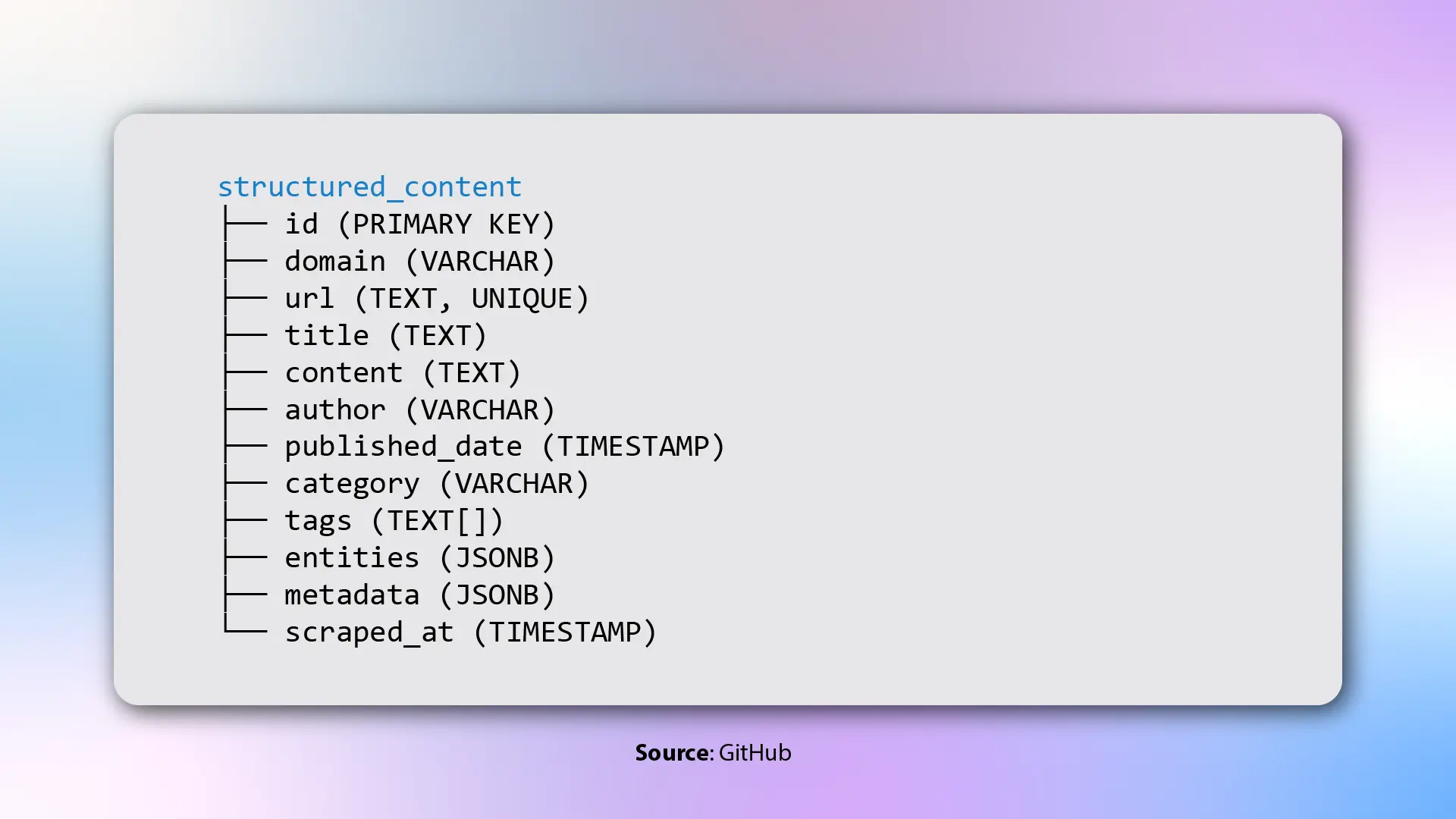
All data lands in the relational database first, establishing a single, consistent source of truth before anything else happens. In the Postgres-Neo4j-MCP project on GitHub, this shows up as a structured_content table holding fields like domain, URL, title, content, author, published date, category, and tags, created directly through a schema setup script before any graph work begins.
Step 2: Mirror to Neo4j
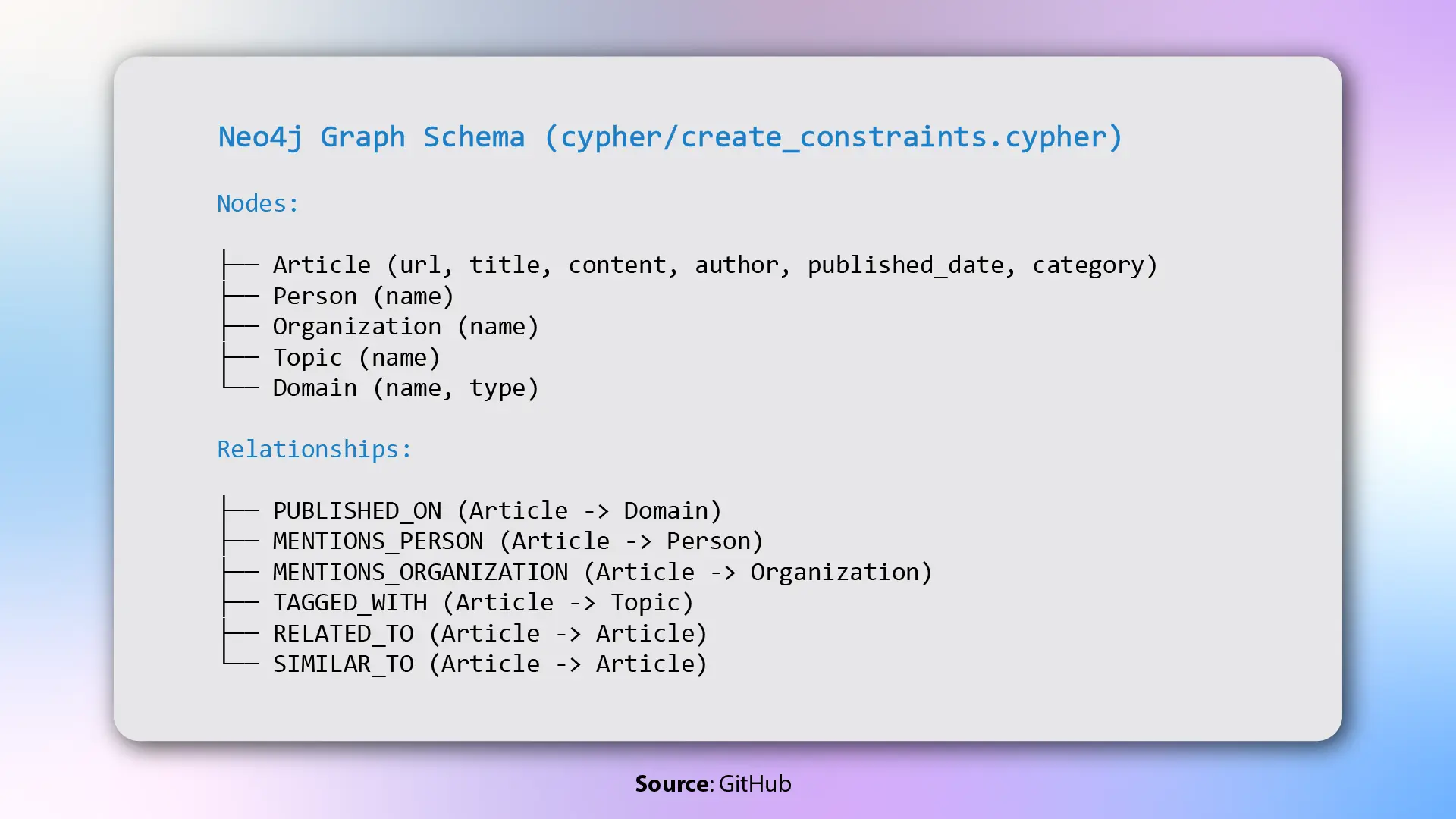
A sync process picks up that relational data and transforms it into graph relationships, restructuring it as nodes and edges built specifically for relationship-heavy queries. In the same Postgres-Neo4j-MCP project, this is handled by an ETL pipeline that connects to PostgreSQL, extracts the structured content, and converts it into Article, Person, Organization, Topic, and Domain nodes, linking them through relationships like MENTIONS_PERSON, TAGGED_WITH, and RELATED_TO.
Step 3: Query intelligently
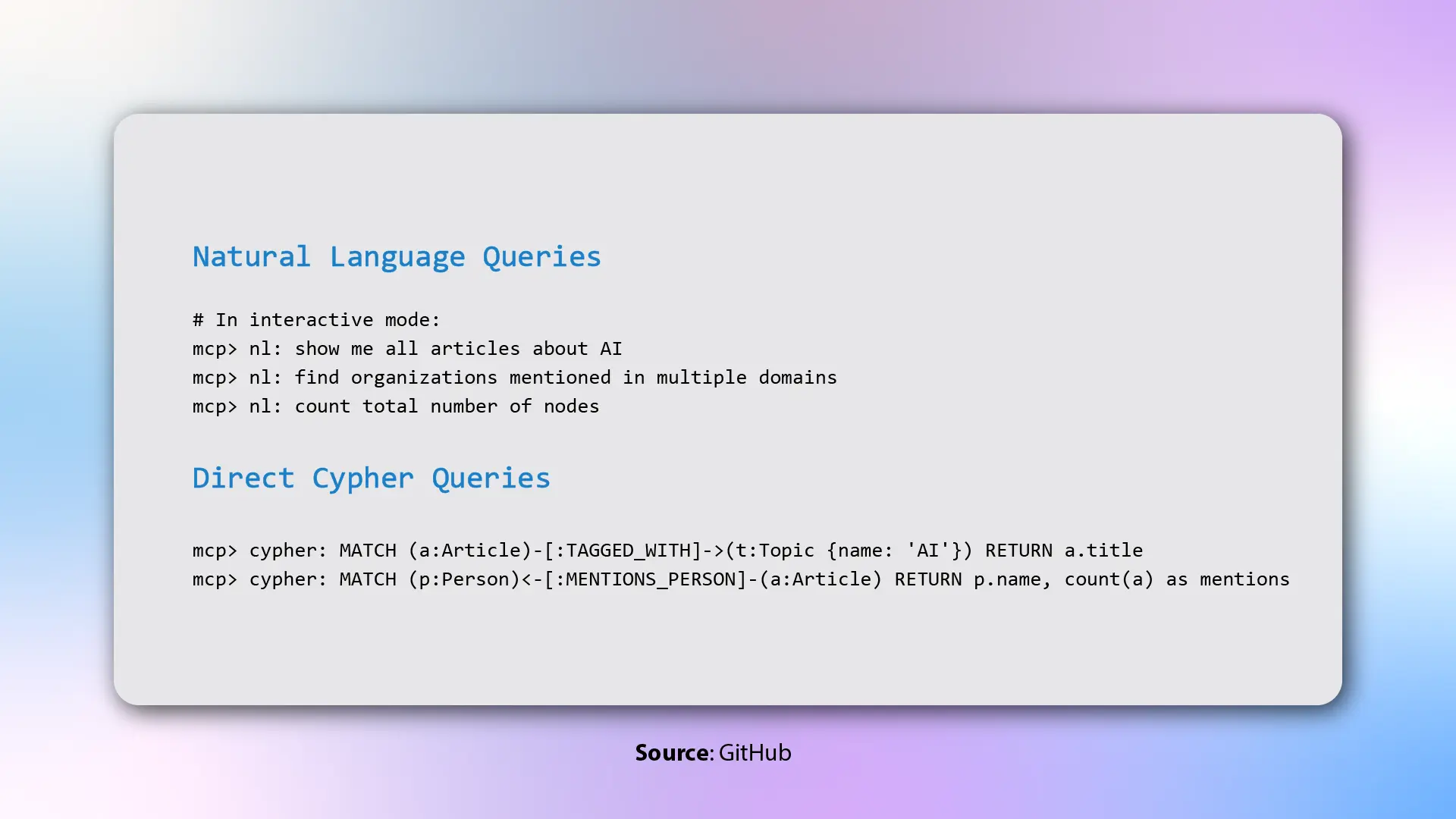
Incoming queries are routed to whichever database actually fits the question, with structured aggregation to SQL and relationship traversal to the graph layer. In the Postgres-Neo4j-MCP project, this shows up in the MCP server layer, which accepts either direct Cypher queries or natural-language requests and resolves them against the graph, while structured lookups stay with PostgreSQL.
For a closer look at keeping SQL performance solid at this scale, USDSI's insight on how to master SQL debugging at scale with deSQL covers practical techniques for keeping the relational side of this architecture reliable as data volume grows.
Key Use Cases for This Combination
This hybrid architecture proves its value most clearly in scenarios where structured records and interconnected relationships need to be analyzed together, not as separate problems. Here is where that combination shows up in practice.
Best Practices for Implementation
Getting this architecture right depends on a handful of deliberate choices, not just wiring two databases together and hoping they stay in sync. Listed below are key practices to follow.
Building the Skills for This Combination
Working effectively across both relational and graph systems takes a solid foundation in data architecture and applied AI strategy, not just knowing one query language. USDSI's data science certifications build this kind of cross-system, applied data expertise directly into their curriculum, covering the architectural thinking needed to design systems like this one at scale.
Way Forward
SQL and graph databases are not rival technologies; they are complementary tools solving genuinely different problems within the same big data pipeline. Organizations getting real value out of this combination are the ones treating it as a deliberate architectural choice, syncing structured data into relationship-aware storage, rather than trying to force one database into a job it was never built for.
FAQs
What job roles typically work with both SQL and graph databases?
Data engineers, backend developers, and data architects most commonly manage both systems together in production environments.
Does adding a graph database always improve query performance?
No, only for relationship-heavy queries; simple lookups and aggregations still run faster on a well-indexed SQL database.
Do data analysts need to learn Cypher, Neo4j's query language, alongside SQL?
It depends on the role; analysts focused on relationship-heavy insights benefit from Cypher, while those doing standard reporting can rely on SQL alone.
This website uses cookies to enhance website functionalities and improve your online experience. By clicking Accept or continue browsing this website, you agree to our use of cookies as outlined in our privacy policy.